May I never lose the wonder....
In a week where this sentiment has been my prayer, Thankyou Music are offering a free download of a wonderful new song, 'The Wonder of the Cross' by Vicky Beeching as sheet music and in mp3.
Go and download it now.

In a week where this sentiment has been my prayer, Thankyou Music are offering a free download of a wonderful new song, 'The Wonder of the Cross' by Vicky Beeching as sheet music and in mp3.
Go and download it now.
 For over a decade UCCF staff, Relay Workers and students have headed out to Moldova for the annual 'English and Bible Camp', run by the Moldovan equivalent of UCCF, CSC. This year, I'm unable to attend (being only three weeks into married life) but I wonder if you wouldn't mind saying a prayer for the trip, which leaves today. The photo us of me and some Moldovan students from last year's trip.
The trip will last three weeks. It will take over 24 hours for the team to travel to Chisinau, the capital of Moldova. They'll get together today in Birmingham and then fly out to Bucharest in Romania early tomorrow morning. They'll then face the joy of an overnight sleeper train into Moldova! Pray for safe travel for the team.
Then, from Monday until Saturday, the team will have an orientation week in Moldova, preparing for the camp. As part of this, the team will get to know each other, find out a bit more about Moldovan culture, have some Romanian lessons, learn about God's plan for evangelism and prepare Bible studies from Luke's Gospel. It's an intense and often quite stretching time. Pray that it's a significant and fruitful week spiritually, and that all team members get to know and love Jesus more through the studies in Luke.
The focus of the trip is the English and Bible Camp, that will run from 8th-17th July. This year, 58 Moldovans are expected, two-thirds of them not Christian. Most of them will have read little or nothing from the Bible. The team's job is to teach English classes and to lead the Bible studies for everyone. I found the camp exhausting and very tough, emotionally and physically, but loads of fun! Pray for good relationships across languages, plenty of fun, strength and stamina, and clear gospel teaching. Pray that Christians grow in love for Jesus, and non-Christians repent and believe the good news as they meet Jesus in Luke's Gospel.
After the camp, British students stay in a Moldovan student's family home (a brilliant highlight of the trip). There's then a debrief period ... and long journey home to Britain with plenty of sleep!
Pray for the team: Huw, Cathy and Rachel (team leaders); Olivia, Flick, Ebek, Jo, Becky, Judith, Jess, Philip & Jeremy (students).
I'm currently putting together in my head a more substantial posting about Jesus and the kingdom, but here's a puzzle I've come across as I've been working through Matthew's Gospel - why the long section and great detail about the execution of John the Baptist (in 14:1-12)? How does this emphasis help Matthew's agenda in writing his gospel?
The question perhaps becomes more pointed when we bring Mark's account into play. In the 'tabloid gospel', where it seems space is rarely dedicated to details that are unimportant to the theological account of Jesus' life, death and resurrection, a relatively vast section is dedicated to the beheading of John the Baptist (6:14-29).
Here are a few thoughts that I've had, but I'm still puzzled and would like to hear what others think.
My first reflection was that (in Matthew's Gospel at least, and it's on this Gospel I'll focus), the account of John's beheading follows Jesus' rejection in Nazareth (see 13:53-58). Jesus is the 'prophet without honour in his home town'. John is another prophet who is rejected. I'd wondered whether this was an allusion drawn upon in parable of the tenants in 21:33-46. However I now think this can be ruled out because John's beheading is clearly by Gentiles, whereas the parable focuses on Jewish rejection.
I then wondered if this section links together the preceding chapters, which focus on the nature of the kingdom (especially chapter 13) in the face of increasing Jewish hostility to Jesus, and a section which perhaps focuses more on the effect of Jesus' mission on the Gentiles. The faith of the Canaanite woman (15:21-28) in the face of the Pharisees' legalistic emphasis on righteousness is noticeable and it's probable that the feeding of the four thousand (15:29-39) was in Gentile territory. Peter's confession of Jesus as Christ and Son of God is certainly in a Gentile town dedicated to Caesar, Caesarea Philippi. I still think that this idea still might have some merit.
My most recent thought is that the ministries of John the Baptist and Jesus are tightly linked in Matthew's Gospel. Clearly, Jesus is greater than John, but they have the same message - 'Repent for the kingdom of God is near' - in 3:2 and 4:17. Both are opposed by the Pharisees and the Sadducees. Now could it be that the pattern continuing? Is John's unjust execution at the hands of the Gentiles prefiguring Jesus' own similar death (20:19)? After all, whilst John had perhaps expected the Messianic kingdom to immediately be established, Jesus reminds him that although the kingdom is advancing, it will never come without opposition (see 11:11-13). Is this why Jesus' reaction to the news of John's execution is to withdraw by boat to a private place, where he can process this more and pray upon it as he reflects on his own future suffering and death?
As I say, this remains something of a puzzle, and I'd love to hear other thoughts, as I'm keen to understand more of Matthew's mind and to discover more about the Christ I worship and follow.
Since jotting down a few thoughts on Jesus' Transfiguration, I've come across some articles written by Stephen Williams and published in Themelios in 2002 in two parts, available online here and here.
I'd commend them to read, but my favourite part of the two articles is a quote from A. Michael Ramsay. Beautifully, he said that the Transfiguration '... stands as a gateway to the saving events of the gospel, and is a mirror in which the Christian mystery is seen in its unity. Here we perceive that the living and the dead are one in Christ, that the old covenant and the new are inseparable, that the Cross and the glory are of one, that the age to come is already here, that our human nature has a destiny of glory, that in Christ the final word is uttered and in him alone the Father is well pleased. Here the diverse elements in the theology of the New Testament meet.'
Yesterday I completed my final 'mentoring' Bible study of the year, as I finished studying the book of 2 Timothy with Andy and Steve, two first year CU leaders at Lancaster University. I love the book of 2 Timothy - such emotional words from Paul, and such brilliant convictions to hold for authentic Christian serve. 2 Timothy 3-4 have been really important chapters for me as I have served in Lancashire adn Cumbria over the past couple of years. Below is a talk I gave to CU leaders last November, which I looked over as I prepared yesterday's study. It owes a lot to a talk I heard from Don Carson at the European Leadership Forum.
Well let me add my own welcome to today’s CU Leaders’ Day. It’s so encouraging to see you here. It’s good for us to be able to encourage each other and to think about CU leadership in the middle of what I know for many of you has been a very busy term. I know that some of you have seen incredible things happen this term – some of you have seen your CUs step forward in evangelism and witnessing on campus, some of you have seen people become Christians over the past few weeks. It was great to hear of a guy who started professing as a Christian in Preston on Monday. Some of you have seen CU members take real steps forward in godliness as they have let the gospel loose in their lives.
For others it’s been a really difficult term so far. You’ve put in the hours and it seems that no-one has noticed, or they’ve just been ungrateful. Perhaps you had big plans for this term, and they’ve not quite come to fruition. Your own personal evangelism has been really hard. You’ve been discouraged as other Christians seem to be fighting less against sin in their Christian walk. You are discouraged as you look at your own life and your own struggles with sin.
For the majority of us here, I suspect that it’s both of the above. This shouldn’t really surprise us as whenever we read about gospel ministry we read that it is a mixture of these two things – real joys and real frustrations and sorrows. And so, as we start this morning, I thought it would be really good for us to think about authentic gospel ministry in more detail. It’s perhaps particularly appropriate at this point of the year, as I know from my own personal experience that this is a tough point of the term. It’s already been a hard couple of months since the highs of Forum and Freshers’ Weeks, and it still seems like a long slog to come. It all just seems so tiring and not really that worth it. And the temptation is to ease off – to let Jesus slip down our list of priorities, or to quietly divorce ourselves from our CU responsibilities, or in our tiredness to become bitter. We need the reminder not to give up.
Slacking off was something that obviously had crossed Timothy’s mind. In 1:7-8, Paul says this to Timothy: ‘For God did not give us a spirit of timidity, but a spirit of power, of love and of self-discipline. So do not be ashamed to testify about our Lord, or ashamed of me his prisoner.’ The situation is this. Timothy is a leader – not at Ephesus University Christian Union, but as a church leader. His predicament, although not identical to anything that anyone here faces, might be familiar to some. He’s finding things really hard. Paul – his mentor – is not around. More than that, he’s in prison and faces execution. And people about Timothy – Christians included – are saying that Paul is a joke. They are saying that identifying with Paul shows just how weak and stupid Timothy is. They are personally hostile to Timothy. More than that, some members of Timothy’s congregation have also turned to false teaching. We read about that in 2:17-18. Finally, it seems that the congregation is also being persecuted by those from outside of the church community too – this is probably what Paul is alluding to in 3:11. All in all, it’s a difficult situation for Timothy, our young leader. And so, despite having been around with and discipled by Paul for years and years, he’s thinking that he faces an impossible task. He’s thinking about giving up, just as Demas had, as we read about in 4:10.
And so when we come to 2 Timothy 3-4, we come to two very precious chapters of Scripture. Because here, Paul, the ageing apostle, probably writing his last letter to Timothy before being executed, passes on to Timothy the convictions he’s going to need to keep going. And these are convictions that we need to hear if we are to keep living radically as Christians, to keep leading our CUs with gospel radicalness. Otherwise, we’ll just want to blend in with those around us, or even worse, we’ll give up, thinking that gospel ministry is an impossible task.
Hold few illusions about the world [3:1-13]
The first thing that Paul says we’re going to need to remember is that we should hold few illusions about the world. 3:1-13 are scary verses. Paul says – verse 1 – that we’re living in the last days. In the Bible, this is the name given to the era between the giving of the Holy Spirit at Pentecost, and Jesus’ second coming and return in judgement. And the period is called the ‘last days’ because the Old Testament makes it very clear that the penultimate date of redemption history is the giving of the Spirit. And that’s been and gone. And so, if you like, in God’s diary, the next big date is Jesus’ return and judgement of the world. And you can read more about that in Joel 2 in the future.
The point is this. The devil, though defeated in principle, is still outraged and violently active. Although the end is secure – death really is dead, love really has won, and Christ really has conquered – the devil is doing his very best to wreak havoc in our world before he is condemned forever. We really do live in a spiritual battle. Sometimes when we think about the devil and about spiritual battle, we think about supernatural occurrences. And around the world these do happen. But, far more often, and far more sneakily and subtly, the devil works to disarm the church. And this is both through persecution external to the Christian community, and false teaching and tension within the Christian community.
Paul describes both here. Verses 1-9 describe the sort of false teachers that it appears were within the church in Ephesus. Notice how many of these words focus on self – so we have – verse 2 – they are ‘lovers of themselves, lovers of money, boastful, proud’; but they are also socially destructive in their behaviour – ‘abusive, disobedient to their parents’. They disrespect authority. They treat others without grace – ‘ungrateful, unholy, without love, unforgiving’. They treat others nastily, as we read, they are ‘slanderous, without self-control’. They are also ‘brutal, not lovers of the good’ – literally, Paul says they are ‘unlovers of good’. Their fundamental attitude problem is then described: ‘treacherous, rash, conceited, lovers of pleasure rather than lovers of God’.
And what does Paul say it all boils down to? Verse 5 – they have ‘a form of godliness but [deny] its power.’ For them, godliness is just an outward thing; it’s just a veneer and has absolutely no power to transform lives. And what’s the really scary thing here? It’s this: Paul is describing people within the Christian community. He’s describing people who would have described themselves as Christians. They were probably even Christian leaders. Yet, still they are described in this way.
The history of the Christian church has been littered with Christian leaders who have been set up on moral pedestals, only for them to come crashing down. Some of those people have shown short-term moral slips; they have fallen and found themselves in situations of which they are truly repentant. Yet, Paul says, there are others within the Christian community who deliberately are in it for themselves and care little or nothing for the gospel. And do you see Paul’s command to them? ‘Have nothing to do with them.’
Paul isn’t saying that Christian leaders have to be perfect. If I’m honest, I know that some of the words in these verses describe me, and I’m sure there are words there that would describe you. If we obeyed this completely rigidly, we’d have to excommunicate ourselves! But this is not quite what Paul is saying. What he is saying is this: genuine Christianity will show itself in conduct. An increasingly godly person attests the reality of the gospel in their life. The gospel is powerful. When it is genuinely at work, it will change people. In the false teachers, it clearly isn’t at work. In fact, as we read on, we see that they prey on the vulnerable (verses 6-7), and that they have depraved minds.
Why is Paul so strong in his wording here? I think it’s because he knows what we can be like as leaders. He knows that being in positions of authority can lead to the abuse of the position that we have been called to. And so he’s implicitly calling us to check our motives. How are our hearts? Do we strive after genuine godliness or are we more bothered about outward show? Do our lives attest to the power of the gospel at work, or are they simply made up of veneer? Check yourselves, says Paul, otherwise you might shipwreck your faith. A bad motive at work now when it comes to fruition might lead to something far worse. If that’s you, repent. Spend time asking God to forgive you and to purge you of bad motives.
Not only is there a danger of disruption from within the church, but also externally as well. Paul knew all about this. In verse 11, he reminds Timothy of the persecution he received at Antioch, Iconium and Lystra. You can read about that in Acts 16. Paul was flogged and left for dead, simply for preaching the gospel. And whilst that’s unlikely to happen on any of our campuses, we do see genuine persecution. I know that many of the people here today have seen genuinely hostile reactions to the gospel. We shouldn’t be surprised.
Paul finishes this section with verses 12-13, which are two of the most sobering verses in the whole Bible: ‘In fact, everyone who wants to live a godly life in Christ Jesus will be persecuted, while evil men and impostors will go from bad to worse, deceiving and being deceived.’ Everyone who wants to live a godly live in Christ Jesus WILL BE persecuted. We WILL BE. If we’re not now, we will be in the future. And with all of this, there’s the temptation to think that we must be doing something wrong. We see hostile reactions to gospel events that we put on, from non-Christians, and sometimes even from Christians. We think we must be doing something wrong. Well, that’s not necessarily the case. Because we live in a spiritual battle. The devil is sneaky. He will try anything to stop us doing gospel work. But knowing his schemes helps us to spot them. And so this is Paul’s first instruction to Timothy: hold few illusions about the world; we really do live in a spiritual battle.
Hold on to the Bible [3:14-17]
We can read something like 2 Timothy 3:1-13 and think, well then, why do we bother? We feel so ill-equipped and so small and so scared. It seems like we’re facing a losing battle.
But then … But then Paul chimes in with these famous words about the Bible:
But as for you, continue in what you have learned and have become convinced of, because you know those from whom you learned it, and how from infancy you have known the holy Scriptures, which are able to make you wise for salvation through faith in Christ Jesus. All Scripture is God-breathed and is useful for teaching, rebuking, correcting and training in righteousness, so that the man of God may be thoroughly equipped for every good work.
What a great tonic these words are! Don’t just hold few illusions about the world, but hold onto the Bible says Paul. We do live in a spiritual battle, but the Bible is well able to cut through these spiritual dimensions and right to a person’s heart. It’s through the Bible that the Spirit transforms people. We live in a spiritual battle in these last days, and it seems such hard work, but we have the Bible! And notice what Paul says the Bible does through the power of the Spirit: ‘it’s able to make you wise for salvation!’ Hallelujah! It’s able to tell us what we need to know in order to be saved. It’s there to help us trust in Jesus.
But also, notice that it’s useful for teaching, rebuking, correcting and training in righteousness. What an encouragement this must have been to Timothy, as he is reminded of the Bible’s power. Timothy is serving a church in Ephesus that is in an utter mess, and Timothy must have felt powerless. But Paul reminds him: no, you are not alone – you have the Bible, and with the Spirit that is powerful to change people. Do they need teaching? Let the Bible do it! Do they need rebuking? Again, trust the Bible! And the same applies for correcting and training in righteousness. In fact, if we want people to be equipped for any good work at all, the Bible has it covered.
This is a good reminder for us in CU leadership. Often people don’t behave as we want them to. We get frustrated. Why don’t they seem to share the same passion for the lost? Why aren’t they bothered about sin? Why are they so half-hearted about things? Well hear the encouragement. Keep teaching the Bible, because through God’s Holy Spirit, the Bible will teach, rebuke, correct and train in righteousness. There’s no situation that the Spirit can’t change as the Bible is taught, there’s no heart too hard. Sometimes I think about an individual’s hard heart and the God of the Universe. God is well able to change a heart as his Bible is taught. We can count on it.
All of this means that, as CU leaders, we’re going to privilege the teaching of the Bible highly. It means we’ll commit to reading the Bible ourselves, so that we’re taught, rebuked, corrected and trained in righteousness. It means that we’re not just going to fill up our CU calendars with anyone we can get to speak at short notice or just the speakers who tell the most jokes, but we’re going to try and get the very best Bible teachers in, so that God’s Word can be faithfully taught and radically set loose in our lives. It means that, as small group leaders, we’ll put in the hours to prayerfully get our heads around the passage. And it also means that we’re going to trust the Bible to do its work. Often the temptation is, particularly before mission weeks, which we’ll be thinking about a bit more this afternoon to rely on other things to whip people up. A guilt trip perhaps, or an emotionally passionate speech to frenzy people for mission week. But do you see what Paul says? Teach the Bible and trust the Bible to do its work. That is the only way in which people will be changed at their core. Hold onto the Bible.
Hold the Bible out to others [4:1-8]
Related to this, Paul tells Timothy to hold the Bible out to others. This is 4:1-8. Hold the Bible out to others. And I want us particularly to think about verse 5: ‘But you, keep your head in all situations, endure hardship, do the work of an evangelist, discharge all the duties of your ministry.’
I guess Timothy could have given any good reason for his church not to be doing evangelism at their stage in history. The church was in a mess, there was false teaching within and a lot of tension. Timothy himself wasn’t exactly the most popular person as he taught the church there. Yet Paul says: ‘do the work of an evangelist.’ This is quite amazing, isn’t it? Paul is saying: don’t let evangelism drop off of your list of priorities, even though there are all sorts of problems within the church.
Perhaps we need to hear this too. When the chips are down, it’s really easy to evangelism to completely drop off of the radar. It seems that we’ve got enough fires to fight first before getting out and sharing the gospel with non-Christians. But Paul knows exactly what situation Timothy is facing, and yet says: do the work of an evangelist. I think it’s sometimes easy to think, well, we’ll just get all of the other issues in CU sorted and then we can focus on doing some evangelism. Well, let me say this. If you wait for that time, you’ll be waiting for ever! You’ll never do any evangelism!
Instead, says Paul – verse 2 – preach the Word in season and out of season; when the gospel is popular and when it is not; when the CU is flavour of the month with the SU and when it is not; when the CU are really excited about doing gospel outreach and when they are not. Why? Because it doesn’t depend on us! Because God’s Word is powerful in itself. And just to underline the point, Paul tells Timothy to correct, rebuke and encourage – the very things he’s just said the Bible does! Keep going. Keep proclaiming, because even when you are feeling at your very weakest, the Spirit is able to use God’s Word to change hearts. Again, it’s this conviction that keeps us going.
Pretty much all of you here have heard recently about a guy in CU history called Norman Grubb, who in 1923 went around all of the rooms in his hall and shared the gospel with the undergraduates there. It was the beginning of UCCF: The Christian Unions. Well, now let me add the name of Howard Guinness. He was a medical student in London in the 1920s, who was challenged when he heard Norman Grubb speak about the lack of CUs in Canada. He shared this with his CU, who between them sold their bicycles and camera equipment in order to pay for Norman Grubb to have a one-way ticket to Canada, to set up the CU movement there. And that’s precisely what he did – he spent a few days on each campus, did some evangelism, put the Christians together, founded a CU and then he moved on. That’s how the CU movement started in Canada. And he then went on to start the CU movements afterwards in Australia, New Zealand, South Africa and several other countries! If you’d like to read more about the growth of the CU movement around the world, I’d highly recommend this book ‘From Cambridge to the World’. You’ll see that CUs have had a truly global impact.
Anyway, the point is this. What spurred people like Norman Grubb to share the gospel with those on their corridors? What spurred Howard Guinness to cross continents for the gospel? I can tell you, it’s not because they thought they were great. Read sections of their diaries, and you’ll see, far from it. Most of the time they were petrified. Yet they had a sure confidence that God works as his word is proclaimed, as his gospel is preached. It’s that which changes hearts. And this conviction keeps us going. Regardless of the situation, God’s word can speak into it. It’s why we have CU mission weeks. It’s why during mission weeks we’re not just wanting to be nice. We want people to know that Christians are not freaks, but the main thing is that we want the gospel proclaimed. Because we’re never going to change the situation, but God’s Word can. Hold out God’s word to others.
Hold the future at the front of your mind [4:1, 8, 14, 18]
Paul’s final instruction to the Timothy doesn’t come so much as a block of text, but as a theme that runs throughout the whole letter. It’s a theme that we also see in the verses here, and it’s this: hold the future at the front of your mind.
I want you to imagine that you go into university or college on Monday, and you have been sent an email in error. It was supposed to be a confidential email sent only to university authorities, but somehow you’ve been copied in. And, to your amazement, it says that all of the people on your course are going to be automatically awarded firsts, regardless of how well you do in your coursework and exams. They’re going to be awarded by the university because they’d like to draw attention to the high quality students that they have attracted. Now, I know this is pretty far fetched, but how would you respond to that? How would you spend your time? I know that, if it was me, I’d kick back and enjoy myself knowing that a first was coming my way.
Similarly, the future always affects how we behave now. If we know something is coming, then we behave accordingly. And Paul speaks of the future regularly, because he knows that it should affect our behaviour now. Have a look a chapter 4, and you’ll see that Paul mentions it very regularly: verse 1 – ‘In the presence of God and of Christ Jesus, who will judge the living and the dead, and in view of his appearing and his kingdom, I give you this charge’; verse 8 – ‘Now there is in store for me the crown of righteousness, which the Lord, the righteous Judge, will award to me on that day…’; verse 14 – ‘Alexander the metalworker did me a great deal of harm. The Lord will repay him for what he has done’; and, finally, verse 18: ‘The Lord will rescue me from every evil attack and will bring me safely to his heavenly kingdom.’ Do you see what Paul is saying? He’s saying this: live in the light of eternity.
It’s so easy to lose our eternal perspective. It’s very easy to get caught up in the here and the now. And, as CU leaders, if we do this then we’ll probably slip into one of two traps. One of them is that we’ll just get so caught up by the here and now that we never do anything with eternity in sight. I know myself that it’s very easy to get caught up with the trappings – with room bookings and socials and emails and meetings and the rest – that, even though the CU has been set up with eternity in mind, that we never do anything with eternal consequence. And the CU just becomes a social club. Or the other danger is this: we know that evangelism should be a priority, but we’ve forgotten about eternity and we’re only bothered about results in the short term. We’re only bothered about packed meetings and looking good on campus. In both cases, we’ve forgotten about eternity.
One of the most helpful verses I’ve found here is 1 Corinthians 3:13, where Paul says that judgement day will test the quality of a person’s work. It’s at judgement where we’ll see the eternal value of our work. And so let’s work for things that will last for eternity. It’s so easy to get caught up with projects, but let’s commit ourselves to people – to investing the gospel into the lives of Christians and non-Christians, praying that God will transform it and give eternal value.
Sometimes eternity is not popular. Living for eternity means that we’re going to find ourselves in messy situations where, if judgement did not exist and there was no eternal perspective, we’d be completely wasting our time. But let’s commit to keeping eternity in view – let’s commit to not letting our CUs or small groups just get subsumed with ‘stuff’, and let’s not fall into doing evangelism for just the here and now. Let’s keep eternity in view.
Paul wrote to Timothy because Timothy was under pressure to give up, to slack off. We’re going to face the same pressure. It’s part of living in a society that has very different priorities and focus. And so let’s remember those things Paul reminded Timothy: hold few illusions about the world; hold onto the Bible; hold the Bible out to others and hold the future at the front of your mind. If we hold onto these things, by grace, we won’t give up or lose heart.
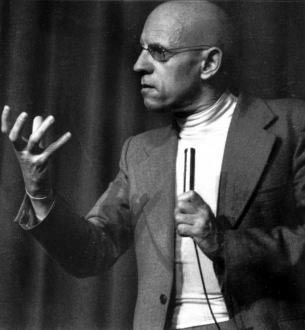 In a couple of previous postings (here and here) I started a mini series reviewing James Smith's book Who's Afraid of Postmodernism? Taking Derrida, Lyotard and Foucault to Church. This final entry examines what Smith has to say about the writings of Michel Foucault.
Of the three cultural theorists in questions, it's perhaps Foucault whose work I am most familiar with. As someone who was a geography undergraduate, Foucault's work is more overtly spatial than much other sociological writing (see, for instance, in his work on prisons in Discipline and Punish). In particular, his methodology - known as 'archaeology' - where he traces through how a particular thing or phenomenon has been viewed through different historical epochs, is something that has been enthusiastically embraced by many social sciences.
I guess the other thing to add is that, in some ways, I've never felt quite so concerned about the ramifications of Foucault's work to my Christian belief. Sure, there were challenges as an undergraduate - particularly in being told that Biblical condemnation of certain practices reflected only the culture it was written in (rather than wrong for all humans in all places in all periods of history). This argument leads to a kind of moral relativism, which is obviously incompatible with a Biblical worldview. But, overall, I'd always felt more resourced to tackle some of these ideas head on than the more subtle arguments coming through language and semiotics.
Anyhow, in his book, James Smith tackles the subject of discipline, which is familiar in many of Foucault's writings. Foucault argued that society and institutions are designed to give vision to certain people, forcing others to behave in certain ways. Foucault's famous example is Jeremy Bentham's 'panopticon' prison design, whereby the prisoner cannot see any other fellow prisoner, and yet knows that the eyes of the prison guard could be upon them at any one time. Britain's obsession with CCTV is perhaps the same - we change our behaviour because we know that at any given time, we could be being watched. This is the very idea of surveillance.
It's within this framework that Foucault assembles his theories of knowledge. Foucault throws out the idea that truth is somehow innocent - instead, certain ideas and biases and prejudices are combined in order to control others as we would like. Like the architecture of the panopticon, Foucault claims that we assemble ideas as 'truth' in order to make people behave in a certain way. And so we come to Foucault's famous slogan - 'power is knowledge' - as Smith puts it, 'at the root of our most cherished and central institutions ... is a network of power relations.' Power and knowledge are inextricably linked, in order to make people conform in certain behaviours.
And so, linked to this is the idea of a deep 'hermeneutic of suspicion' - we can now consider no truth to be innocent. As Smith puts it, 'what might be claimed as obvious or self-evident is, in fact, covertly motivated by other interests - the interest of power.' And so different historical eras have had different 'truths' because certain people have wanted to have power over others in some way. Foucault's picture of society is a disturbing one - one of control and domination - and his message rings through: be suspicious of all.
Taking Foucault to church
Smith's main contribution here is a reflection on the nature of power. In the main part, he is happy to go along with Foucault's description of society and its institutions, and the web of power relations within. But he is unhappy to take the negative Foucauldian of power. This longer quote is, I think, helpful:
Should we accept this negative view of power? Is power all bad? Specifically, can Christians share in this devaluation of power and discipline as inherently evil? Can we who claim to be disciples - who are called and predestined to be conformed to the likeness of the Son (Romans 8:29) - be opposed to discipline and formation as such? Can we who are called to be subject to the Lord of life really agree with the liberal Enlightenment notion of the autonomous self? Are we not above all called to subject ourselves to the Domine and conform to his image? Of course, we are called not to conform to the patterns of 'this world' (Romans 12:2) or to our previous evil desires (1 Peter 1:14), but that is a call not to nonconformity as such but rather to an alternative conformity through a counterformation in Christ, a transformation and renewal directed toward conformity to his image. In fact, by appropriating the Enlightenment notion of negative freedom and participating in its nonconformist resistance to discipline (and hence a resistance to the classical spiritual disciplines), Christians are being conformed to the patterns of this world (contra Romans 12:2).
This seems, to me, to be a wonderful insight. Another sentence from Smith, 'what constitutes the proper end, or telos, of human formation depends on the ultimate story we tell of what human beings are and what they are called to be.' In other words, Christians must absolutely refute the view that power is all bad: the Spirit's power at work in us, for instance, is wonderful - he frees us from our sin and makes us more like Jesus, the perfect human being and the only one since Adam to experience living as humans were created to live (ie in perfect relationship with God). Power is positive if it is used for positive ends - and living the life we were created to live is the greatest of these.
Smith makes a couple suggestions for how Foucault's work ought to work itself out in the world. Firstly, we the church should recognise the process of disciplinary formation in society - unveiled we can be aware of those processes that would make us behave as those with power want (particularly to be capitalist animals) and then diagnose the correct Christian response. We need to realise that this process runs counter to what it means to follow Jesus as a disciple.
Smith then says that we must come up with our own disciplines 'that will counteract the formation of MTV and television commercials'. Smith goes on that 'we would do well to recover the tradition of spiritual disciplines such as prayer and fasting, meditation, simplicity and so on as a means of shaping our souls through the rituals of the body.' I guess this is where I think James Smith sells himself a bit short. He's right in quoting Romans 12:2 ... but spiritual disciplines themselves cannot transform. What is needed is to 'be transformed by the renewal of your mind' (ESV). Smith does speak about the need for grace to change - but this comes powerfully through the work of the Spirit as he transforms us by the Word. The greatest way of being transformed in a culture which screams out anything but Jesus is Lord is the Spirit's transforming power through the Word.
In particular, it would seem to me that teaching on God's design for humans is going to be necessary if we are to crave the Spirit's power in transforming us to be like Jesus. I remember the first time when someone told me that Jesus was the only person who has ever lived who was truly human. Jesus is the only one who lived as he was created. A Christian view of freedom (the view of John 8:31-32) that we are free when we live as we were created (rather than the more 'democratic' view of choosing A or B) will be vital. Christians and non-Christians alike need to see the beauty in God's blueprint for humanity in order to want the Spirit's power for change.
A couple of final things
In closing, I want to add a couple of points. Firstly, as I hope you've seen, I've tried to give an accurate and fair review of this book. I think, overall, it's a great and helpful read. However, the book's reviewers (on the back cover) are nearly all emerging church leaders, including Brian McLaren, Robert Webber and Carl Raschke. Why is it that the emerging church seems so happy to engage with the postmodern mindset, where others - which I think are often set upon more Scriptural convictions - seem slow to do so? Must we choose between a grouping of churches that probably unhelpfully panders to the postmodern mindset and between the rest that seem completely unwilling to do so at all? (Or is that a caricature?)
To finish, I want to draw attention to something that James Smith doesn't examine at all, and that's addressing Foucault's hermeneutic of suspicion. I remember giving a talk about a year ago at the height of the Da Vinci Code hype: now there's a postmodern idea - 'trust no-one!' In this talk, I addressed the natural suspicion that we have of truth - 'why do they want me to believe this?!' It seems to me that the way in which we counter the suspicion that people have of the gospel is authenticity - to share our lives with others. I remember asking those present in the talk to question the motives of the Christians that brought them - 'Why do you think they want you to become a Christian?' Christian authenticity - sharing our lives as well as the gospel - is a key way in which we can demonstrate that we are not trying to have power over others, but that we long for them to come to the truth, because we love them and long for Jesus' glory. Now there's two motives that in eternity won't be questioned.
I've always appreciated hearing from Billy McCurrie, minister of Aughton Park Baptist Church in Ormskirk. Rev McCurrie is a former Ulster Volunteer Force terrorist who dramatically became a Christian during his time in the Maze Prison in Northern Ireland. As I've heard him tell his story before, I've been reminded of God's abounding grace that can change any heart, even a heart as bitter as Billy's.
Rev. McCurrie has just been confirmed as a speaker for a lunchbar at Lancaster University next term where he'll be speaking on Why God forgives terrorists like me. As a preview, you can hear him telling his story on YouTube (NB video quality is poor for the first few seconds):


