Showing posts with label Moldova. Show all posts

Wednesday, 22 July 2009

Ten important things I learned in Moldova: part 2

Following on from this post...

6. 'Do not forget to entertain strangers' - One of the unique things about the Moldova summer team is that, after the camp, we go home for a short stay with a Moldovan. I wrote about this experience last year. This time, I went home with a non-believing guy called Valentin to his home in a village called Cojuşna. Once again, I was reminded of the poverty that exists even in Europe. The different this year was that Valentin's grasp of English and my grasp of Romanian were on a par (i.e. very low). However, I was blown away by Valetin's hospitality and discovered that it's actually possible to communicate a large amount, even when verbal communication is very limited (although I am hugely grateful for a Romanian phrase book I had, and an ancient Russian-English phrasebook that Valentin owned!).

7. 'I know what it is to be in need, and I know what it is to have plenty. I have learned the secret of being content in any and every situation, whether well fed or hungry, whether living in plenty or in want' - Last Sunday the team split into three groups and attended three different evangelical churches in Chişinau. I had the opportunity to attend Christos Pentru Moldova, a Pentecostal church in the city centre. It was a really interesting experience. Perhaps the thing that will stand with me longest was the sermon, on trusting in Christ in financial difficulty. Moldova is Europe's poorest country and the pressures of lack of money are very real. It's tempting to think that something other than the gospel is needed when there is severe financial pressure. Of course it's right to aim to alleviate these problems, but the sermon reminded me that Christ is sufficient even in times of great lack.

8. 'But we have this treasure in jars of clay to show that this all-surpassing power is from God and not from us' - My friend Cathy Midmer, who'd co-led two previous trips with me, used to always say that being in Moldova makes a British person feel their weakness. It's true. Everyday activities that would normally come very easily all of a sudden become things that are risky and hard. Add the inevitable bout of illness to the mix and you're made to feel very weak. But with the difficulties we faced this time, it was more obvious than ever that the British team were frail and, like everyone, possessing their own honest shortcomings. One of the CSC staff workers commented that she'd always secretly thought that the British teams in Moldova were somehow super-human. This year she'd realised that we struggled like everyone else. But I think this led to greater glory to Christ. It was Christ that kept us going, and when we were whittled away he remained, just as Paul wrote about in 2 Corinthians 4.

9. 'We live by faith, not by sight' - As I mentioned in the previous post, we spent early morning team times on camp studying 2 Corinthians 1-6. I'd looked at this letter a number of times before, but it came alive as we moved through it methodically. The 'gospel' and 'ministry' of the super-apostles impacted me like never before: a gospel of glory and ministry that celebrated present comfort, the seen and the special. I was convicted by how easy I find it to slip into super-apostle thinking, where I am bothered most about what I see, and lose confidence in the Spirit's gospel transformation being what really matters. Even on the camp, it was easy to get most excited by external things rather trusting the Lord's work in people's hearts. And so the experiences of difficulty were helpful, refocusing me (and the team) onto what really matters: the eternal, internal work of gospel transformation, when the heart is God's true target. As well as some Moldovan non-believers, members of our team were moved to real openness, honesty and repentance regarding a wide range of areas of their lives. When Christians are honest about their lives, it can be tempting to despair at all the messiness. But we live by faith and not by sight. And so it is much more wonderful when hearts are changed than when Christians live a false life that outwardly looks sorted.

10. 'And we, who with unveiled faces all reflect the Lord's glory, are being transformed into his likeness with ever-increasing glory, which comes from the Lord, who is the Spirit' - Perhaps the thing above all that I will remember from Moldova 2009 was the deep work of transformation that the Lord did through his Word and by his Spirit. Nearly every member of our team experienced deep spiritual renewal as they were shown their weakness and sin and driven back to the cross. Several members of the team came face to face with sin and with situations that they had buried for years. The Lord granted some of our team members deep forgiveness. At the same time, at least four Moldovan students professed faith for the first time on the camp, and several others left the camp counting the cost of following Jesus. I have returned reminded once more of the powerful transformation of the gospel and the life that it brings.


Perhaps the three weeks in Moldova this time were three of the most intense weeks of my life. It's difficult to find words to describe some of the things that went on. But please join me in praying that this summer team might prove to have the long-term fruitfulness that I think it might have had, both in Christians and in non-Christians. Pray that the Moldova 2009 summer team might prove of tremendous value for the kingdom.

Tuesday, 21 July 2009

Ten important things I learned in Moldova

Yesterday evening the UCCF Moldova summer team arrived back in Luton after 15 hours of travelling. It was the last stage of an incredible three weeks.

I'd rarely - perhaps never - previously had the opportunity to see the gospel at work so powerfully in the way that it was during our time away. To be honest I'm still finding it a bit difficult to process everything that went on. But here are ten things I'll remember:

1. 'He who began a good work in you will carry it on to the day of completion' - It was so encouraging to see ongoing growth in many of the students I'd met in previous years. Ştefan (a room mate on camp three weeks ago) now works as an accountant and is active in his local church - I was so grateful to God for letting me bump into him again. Another former roommate, Artur is about to start as a volunteer with CSC (the Moldovan equivalent of UCCF) on a programme a bit like UCCF's Relay; Victor (who became a Christian on the camp two years ago) is to start training as a priest in the Orthodox Church, looking to apply what he's learned and serve the saviour he loves there; Tanea (who became a Christian on the camp last year) is going strong as a believer. It was also amazing to see how several friends from last year have softened to the gospel over the past twelve months. There are other stories just like this. It's brilliant to see that our ministry is not 'hit and run' and makes a real difference in the long term.

2. 'I urge that requests, prayers, intercession and thanksgiving be made for those in authority' - Until this trip I guess I'd had quite a romantic view of the former Soviet regime. But over the course of the trip this time it became evident how in Moldova - a former Soviet country with an elected Communist government - this sort of governance plays out. It's a strange time in Moldova. The upcoming elections are the most important in the country's history. Meanwhile, the government seem paranoid about 'destabilising influences'. As Westerners working with students - perhaps those amongst the more politically active in Moldova - we were viewed suspiciously. Roll on endless bureaucracy given to our Moldovan hosts. The whole system works on fear: a real fear of negative consequences if you don't do as you are told. Having had just a taste of this, I've realised how difficult it is to be in this sort of system (especially to be a Christian). Pray for the upcoming elections, especially for the Christians standing to reform the system.

3. 'Rejoice with those who rejoice; mourn with those who mourn' - Due to the culture of fear that I described above, our team ended up having an ultimately unnecessary brush with the authorities. What followed was really invasive and painful for some of the members of our team. One of the things that I'll remember, though, was the way in which our team pulled together. I've never really been part of a group of Christians that has modelled all suffering when one part suffers in the same way. Deep love for each other and deep love for Jesus was behind the deep emotional response that the group showed.

4. 'We do not want you to be uninformed, brothers and sisters, about the hardships we suffered in the Republic of Moldova. We were under great pressure, far beyond our ability to endure... But this happened that we might not rely on ourselves but on God' - I felt out of my depth for nearly all of our time away. Day to day different situations emerged where things just seemed to be spinning out of control. I know that several other individuals experienced this too, especially in the situation I sketched above. There were a whole series of pressures that I'd never experienced in leading other summer teams. On the mornings of the camp, the British team studied 2 Corinthians together. It was very appropriate. Together we realised the great blessing of being made to cast ourselves once more upon Christ and his Spirit. In our time of debrief, several people shared that they had experienced the joy and freedom of this, even in situations of pain and pressure.

5. 'I will give you a new heart and put a new spirit in you; I will remove from you your heart of stone and give you a heart of flesh' - In the evangelistic Bible studies on the camp this year, we used an adapted version of The World We All Want course. In my opinion, one of the real strengths of the course is the way in which it emphasises that real change is impossible without the Holy Spirit, but with the Spirit change of heart and desires is possible and realistic. As this truth penetrated people's hearts, we saw amazing things happen. In our orientation, the British team were convicted of deep sin as we went through these studies - especially regarding trust in works, rules and law to change oneself, rather than the Spirit. On the camp, many Moldovan non-believers camp to crave this indwelling of the Spirit, realising their helplessness to see real heart change without his special work. One girl, just before she trusted Christ, asked a member of the group how many times she needed to pray to receive the Spirit's indwelling. She was amazed to hear that, if the prayer was genuine, she needed to turn to Jesus only once to be forgiven and receive his Spirit. What a privilege it was to bring this good news!

Part 2 follows in due course...

Friday, 26 June 2009

Moldova 2009

On Monday, I'm heading out for the third and final time with a team of students to Moldova to partner with the IFES movement there, CSC.

I'm a swirl of emotions as I prepare to return to Moldova. It's been a hard period of sad goodbyes to friends in Lancashire, and the past few weeks have been quite demanding. The whole setup in Moldova means that you are made to feel weak. I'm already feeling weak and so I'm somewhat nervous about how I might cope this year.

At the same time, I'm aware of how amazing an opportunity we have in Moldova. The main part of the camp is resourcing an 'English and Bible Camp' where there will be about 60 Moldovan students (including 40 non-believers) who come to practice conversational English and study the Bible. We're using The World We All Want evangelistic Bible overview and I'm excited to see the impact this makes in the Moldovan context.

Please pray for us. We're a big team with an extraordinary amount of diversity. Pray that this acts to underline the truth of the gospel that we are proclaiming, rather than act as something that undermines team unity. Pray that we're not ashamed of the gospel, that the British team grow in their knowledge and love of Jesus, and that God draws people to himself.

I'll try to update from Moldova, but this might not be possible.

Itinerary:

  • 29th June: team meets in Luton
  • 30th June: early morning flight from Luton to Bucharest, then travel by coach to Chisinau
  • 1st July: arrive early morning in Chisinau; team orientation lasts until 6th July
  • 6th-15th July: on the English and Bible camp
  • 15th-16th July: team members stay with Moldovan hosts
  • 17th-19th July: team debrief in Chisinau
  • 19th July: travel to Bucharest
  • 20th July: flight back from Bucharest to Luton
Sarah has some more detailed daily prayer requests here.

Wednesday, 22 April 2009

The development of theology and evangelism

I've been reading through Timothy Ware's book The Orthodox Church as part of preparation for the summer team I'm co-leading to Moldova in June and July*. I've been wanting to brush up on Orthodox beliefs as many of the non-believers that attend the camp are influenced at least nominally by the Orthodox Church.

One of the things that has struck me is the extent to which Orthodox and Protestant beliefs diverge because of a difference in whether Scripture or Church is the ultimate authority. Protestants argue that Scripture is the ultimate authority, whereas Orthodox argue that because the canon was formalised by the Spirit-driven Church, Church effectively is the authority above Scripture. (And so church creeds and the writings of the Church effectively have equal authority to Scripture).

This inevitably has an impact on the development of theology. Whereas Orthodox believers would certainly grant the possibility of theological development (in deepening existing Orthodox doctrines), it seems to me that the Orthodox Church's default position is to look at the writings of the early Orthodox saints. Protestanism - with its insistence of being Scripture-driven - places much more emphasis on theological development. The weakness of the Protestant position is that it can be faddish and perhaps (at least in evangelical circles) does not place enough emphasis on the historical testimony of Christians from other generations. But it appears to me that Orthodox theology starves itself of many of the theological developments that a sola Scriptura conviction has brought - diverse issues, including the nature of sin, the atonement, common grace, the doctrine of humanity and so on. I've no doubt that there are many genuine believers in the Orthodox community (and met some incredible people last time round in Moldova), but these under-developed doctrines seem to be very unhelpful.

Certainly my study so far means that I am inclined to run a session for our team's orientation on the doctrine of revelation. I'm also going to be inclined to show that the beliefs that many Moldovans find incredulous (for instance, that Jesus is not just 'Son of God' (which they learn by rote), but also 'God in the flesh') were testified by early Eastern believers. Eventually perhaps these thoughts will come to fruition in a short resource designed to help evangelicals share the gospel more effectively with nominally Orthodox unbelievers.

* The book, recommended by my dad, is a massively helpful and detailed introduction to Orthodoxy. There are second-hand copies on the Internet for next to nothing. Ware himself is a bishop in the Greek Orthodox Church.

Wednesday, 8 April 2009

Pray for Moldova

I don't know how many of my readers will be familiar about the situation in Moldovan following the parliamentary elections last Sunday. There's a summary from the BBC here.

Moldova is a country that is close to my heart. Corruption and poor leadership has held Moldova back from developing (it is Europe's poorest country) and it is crucial that there is a genuine democracy there; and a leadership that will wisely work for the benefit of both the Russian and Romanian ethnic groups.

Please pray for a speedy resolution to the present situation, and pray for safety and opportunities to point to Jesus for the CSC staff and students (CSC is the equivalent of UCCF) that are based in Chisinau.

Wednesday, 25 March 2009

Bureaucracy and the glory of God

So the last few weeks have been punctuated by regular phone calls to Moldova, last minute faxes (I'd never even sent a fax before two weeks ago!) and lots of prayer.

UCCF in the North West has had a long-standing commitment to partnering with the IFES movement in Moldova, CSC. As part of this, we raised money for two Moldovan Christian students to come over to be part of the New Word Alive conference. On paper, it sounded easy. In reality, it's been really hard work to try and make this opportunity happen. It feels that at every turn, we have been thwarted.

As I write, the British Embassy are still looking over the paper work over the Moldovans that are due to come over. Their flight is due to leave at 5.30am Moldovan time tomorrow. In some ways it's a miracle that we've got this far. I'm praying like mad that the visas will be granted in the next three hours and this time tomorrow I'll have met the Moldovan brothers at Heathrow.

The last few days have been a strange mixture of emotions. I've been absolutely humbled and forced to rely on God. I've examined my heart. I've argued in prayer. I've told God that (although I could be wrong) I can't possibly see how he gets more glory with these Moldovan lads staying at home. I can't see why God would want these resources of time and sacrificial giving apparently wasted. I've wondered whether God is wanting to change me in this whole process so I'm called to rely more wholeheartedly on him.

Funnily enough (some might say sovereignly!) I've just found myself writing this paragraph as I put together some cell notes for the University of Cumbria CU on 1 Samuel 1-2:

Hannah’s story should not be read as a promise that God will always remove physical problems, or that he will always get rid of barrenness amongst godly women (although it’s true that the passage does underline the power of believing prayer). The main thing that the writer is trying to illustrate is God’s sovereignty over events: Samuel will become a great and much-needed leader in Israel. If Hannah had had a son at an earlier date, she would never have left him at the house of the LORD in Shiloh. Because Samuel did grow up there, God was preparing him for his future life – to be a man of God and prophet, used to the public gaze and ready for leadership of Israel.
I guess that, regardless of whether or not the visas come through, God works out all things for the good of those who love him. It's a truth I'm still learning.

UPDATE: The British Embassy has closed for the day. I'm about to see if we can change the dates of the Moldovans' flights. I pray on.

Thursday, 31 July 2008

"Sin and God are correlative terms"

One of the sessions that we ran during our orientation before the 'English and Bible Camp' in Moldova was a session on what is the gospel. I was really keen that this session was stretching and went beyond the often quite reduced form of the gospel presented in some of these sorts of seminars.

One thing that emerged very clearly in the session was a lack of clarity on the nature of sin. It seems that many people have unintentionally adopted quite an 'Islamic' view of sin: that is, that people are mainly good (not mainly bad), and that sin is defined by the bad things we do - a set of black marks, if you like. Islam rejects any form of original sin and, given that humans were never in a relationship with God, the Islamic view of sin is not associated with rebellion against God. But to hold onto a quasi-Islamic view of sin will lead you to an anaemic form of Christianity.
Here are a few implications that I can see:

Atonement theology. Within Christianity, sin is presented as a wilful heart attitude in rebellion against God. I'm struck by the number of times that Jesus presents sin as a disease (think, for instance, of John 3:14-15 in context, and Mark 2:17) - there's nothing that we ourselves can do to free ourselves from this attitude of rebellion against God. As Will Metzger puts it, we find ourselves playing God: running our lives as if God did not matter; ignoring God; trying to be self-sufficient and self-made people - and also fighting God: wanting to decide for ourselves what is right and wrong. Sin and God are correlative terms. Rebellion is part of who we have become by nature. And so this leaves us with two interconnected but separate problems:

1. Somehow, we need to be forgiven by the holy and just God for our sinful actions that have flowed from our part hearts.
2. We need to be given new hearts so that we no longer keep rebelling against God.
Both of these things are necessary - we see that the death and resurrection of Jesus not only needs to bear God's wrath, but also to give new life. If the cross and resurrection dealt with only one of these problems, our atonement would be incomplete. Whilst we hold onto to a quasi-Islamic view of sin these things are not seen in clarity.

In our evangelism. We are likely to equate a guilty conscience in a person with conviction of sin. If a person admits that they are not perfect, we'll think that they recognise themselves to be sinful. But, as we've seen, conviction of sin needs to include an awareness of a wrong relationship with God, a sense of helplessness to do right, and therefore a consequent need of a new heart. We need the Spirit to show people that they are not only imperfect - but that they are sinful. The proclaimed gospel makes little sense if this point on sin is missed. Non-believers with a high view of humanity will miss the point of the gospel so long as they don't realise the gravity of the situation they are in. Rather, we must show them that God demands punishment for our sins and we can do nothing to avoid that punishment (because we keep sinning). We need to show them our complete hopelessness outside of Christ.

"I believe that much of our evangelistic and personal work today is not clear simply because we are too anxious to get to the answer without having a man realize the real cause of his sickness, which is true moral guilt (and not just psychological guilt feelings) in the presence of God." (Francis Schaeffer).

The holiness of believers and their sanctification. So long as we hold to a quasi-Islamic view of sin, we're likely to think that we're pretty good people. I'm likely to come to times of confession and look out for things that could be held as 'black marks' against my name. However, once I see sin as relational - as failing to love God and to treat him as God, my view of what is 'sinful' is expanded. I'm not only going to see trangressions as sin, but I'm also going to be aware of how I've failed to be like Christ and how I've failed to live with God as my God. I'm also going to be driven more regularly to the cross and I'll be more deeply amazed by the love that God has shown me.

Monday, 28 July 2008

One world, one dream

There's just ten days until the Beijing Olympics kick off. I can't wait. I vaguely remember the 1988 Olympics in Seoul, but ever since the 1992 Barcelona Olympics, I've loved the whole experience of the Olympics.

Four years ago, I even organised my summer around the Olympics, arranging to meet up with friends only on the days where there was little British interest in the events!

I still love the way in which all sorts of people get really enthusiastic about sports that they'd rarely give two hoots about. Remember how everyone suddenly became badminton experts in 2004 following the run of Nathan Robertson and Gail Emms to the Olympic final?

One of the areas, however, where I guess I've become more cynical is some of the rhetoric that accompanies the Games. Your average opening ceremony has endless eulogising about the way in which the Olympics will, apparently, unite humanity and demonstrate to the world all of the positive characteristics of what it means to be human. The Beijing Games is no different. The Games' strapline is 'One World One Dream', which 'reflects the essence and the universal values of the Olympic spirit'.

Efforts to unite humanity have, of course, abounded. Islam seeks to do it (often by force) under a theocratic regime. Marxism sought to establish an intellectual unity amongst humanity. Now the Olympic Games claims that it can unite humanity through common experiences and a common set of values. With a heavy heart, however, I wonder in all realism the extent to which we'll see these 'universal values' over the coming weeks. It will be miraculous if there's no scandal, no failed drugs tests and no ungentlemanly conduct by the time the Games close in just over three weeks' time.

What struck me in Moldova whilst reading Ephesians 2:11-22 is the massive claim that Christ has united humanity - not by force, not with a common set of values - but through a new spiritual unity. Christians are now reconciled to God (in exactly the same way) and - therefore - reconciled to each other. Those things that make us distinct from each other give none of us a spiritual advantage over the other. We approach the cross in the same way, with our deepest needs met together in the same way.

It may not have had quite the same diversity of humanity as that which will be on display at the Olympics, but I saw something of the Ephesians 2 unity modelled whilst in Moldova. On the English team alone, we had incredible diversity - loud people, quiet people, extroverts, introverts, representatives from seven universities. There was also great theological diversity (at least seven demoninational backgrounds represented). Throw in the Moldovans and the Americans that work for CSC and you have a diverse team (pictured below), with nothing in common except Jesus. Yet we were united. We knew each other was family as soon as we met. And it was brilliant seeing individuals living out that family relationship in laying down their rights and prejudices in serving others first. I guess that's something that not even the Olympics can achieve.

Friday, 25 July 2008

Victor

Pictured above is someone that grew to be a good friend of mine in Moldova: Victor. Victor became a Christian through the English and Bible Camp last year.

I'd heard about Victor's conversion through some of the folks that went as members of the English team in 2007. Yet, upon meeting Victor at the camp, I was amazed that he'd been a Christian for only a year. Victor really loves Jesus and has a deep joy that stands out conspiciously. As Victor shared his testimony on the camp, many were moved to tears by his story.

One of the unique things about the summer team trip to Moldova is the opportunity to go home overnight with a Moldovan student at the end of the English and Bible Camp. This is a great chance to see something of 'real' Moldova. Along with another member of the English team (Jon), I had the privilege of going back with Victor to see his village and his family. I was blown away by the generous hospitality of Victor and his family in Costesti. Victor's family are poor, I would guess even by Moldovan standards. Yet they sacrificially made us feel very welcome.

Jon and I accompanied Victor to his church on Sunday. It was the first time that I'd ever attended a service at and Orthodox church. The service was five hours long - standing only! The service itself was full of contrasts - I guess as an evangelical, there were parts of it I loved and other parts I struggled with. (Victor's summary of the sermon afterwards suggested that that part was good). But I came away encouraged that there are genuine Christians who really believe the gospel and really love Jesus in the Orthodox church. Victor is one of them, and I met several more that Sunday.

Victor hasn't had an easy time as a Christian. He's studying engineering at Hinciesti. It was there that he'd met Tania, his English teacher and a strong Christian, who invited him onto the English and Bible Camp last year. After the camp, Victor became a part of Tania's Bible study group on campus. Yet to be a Bible believing Christian isn't always popular in Moldova. Earlier this year, Tania was called all sorts of names (including 'Judas' and 'Satan'). This wave of persecution eventually led to Tania being sacked. Victor and his classmates that attended Tania's Bible study were also publicly humiliated. It's God's grace alone that has kept this young believer strong.

Please pray for Victor. In some ways he's isolated and paid a higher cost for being a Christian in just one year than many of us have paid in years of being Christians. Pray that his love for Jesus and for other Christians keeps growing.

Moldova 2008

Last night, after nearly 40 hours after leaving Chisinau, the capital city, I arrived home after three weeks in Moldova.

My colleague and co-leader, Cathy, always speaks of how Moldova makes you appreciate your weakness. It's true. There's no place to run and hide from your weaknesses in Moldova. It's a culture where everything is very different from our own, where poverty is very obvious, and where even the simplest tasks can may you feel uncomfortable. All this means that you have no choice except to pray like mad and trust God. Maybe it's this 'enforced humility' that has led God to bless this trip year after year.

Once again, I was amazed by how God had prepared so many people before the trip even began. I was impressed by the teachable spirit in which so many of our own team arrived for our week of orientation in Chisinau. And upon arriving at the camp, it was noticeable how many non-believers had already been prepared too. Moldovan people are very spiritually aware (despite increasing pressures of materialism), and there were good gospel-based conversations even from the first day of the camp.

It was also very noticeable again at how Orthodox culture has deeply affected the outlook of so many Moldovans. I'll write in future posts about some amazing individuals I met who are involved in the Orthodox church. Yet nominal Orthodoxy has left many Moldovans confused about the nature of faith, the nature of repentance and what it means to be a Christian. And whilst many people know the formula that 'Jesus is the Son of God', many are genuinely surprised that Christians believe that Jesus is God in human form.

Perhaps the thing that impacted me most from this particular trip to Moldova was the faith and perseverance of persecuted Christians. I was really moved by the accounts of some Christians who are holding firm to Jesus and his gospel despite intense institutional pressure to recant. It was amazing to see those who are carrying their crosses and following Jesus, even despite losing much.

Tuesday, 1 July 2008

Making the return to marvellous Moldova

On Thursday I'll be travelling down to London to meet the team that I'll be co-leading to Moldova. We're leaving on Friday. (For more about Moldova, look here).

It's a strange prospect thinking about returning to Moldova this time round. Part of me will leave with a heavy heart. Some of you will know that my wife, Linda, yesterday had an operation on her right hip. She won't be out of hospital by the time I leave. Part of me is somewhat anxious: we're leading a large team (23 in total) - there are plenty of potential hiccoughs both in travelling to Moldova and in maintaining team unity. Part of me can't wait to get back to a country that has a very strong emotional place in my mind.


Our trip will last three weeks. It will take over 24 hours for the team to travel to Chisinau, the capital of Moldova. We'll fly out to Bucharest in Romania early on Friday morning. We'll then face the joy of an overnight sleeper train into Moldova (it's actually quite fun)! But please pray for safe travel for both people and baggage - it will make the trip even harder if things go wrong here.

From Saturday until Thursday, we'll spend time as a time in orientation in Chisinau. We'll be hoping that the team will get to know each other, find out a bit more about Moldovan culture, have some Romanian lessons, learn about God's plan for evangelism and prepare Bible studies from Mark's Gospel. It's an intense and often a quite stretching time for team members. Pray that it's a significant and fruitful week spiritually, and that all team members get to know and love Jesus more through the studies in Mark.

The focus of the trip is the English and Bible Camp, that will run from 10th-19th July. This year, about 75 Moldovans are expected, two-thirds of them not Christian. Most of them will have read little or nothing from the Bible. The team's job is to teach English classes and to lead the Bible studies for everyone. Previously I found the camp exhausting and very tough, emotionally and physically, but loads of fun! Pray for good relationships across languages, plenty of fun, strength and stamina, and clear gospel teaching. Pray that Christians grow in love for Jesus, and non-Christians repent and believe the good news as they meet Jesus in Mark's Gospel.

After the camp, British students stay in a Moldovan student's family home (a brilliant highlight of the trip). There's then a debrief period ... and long journey home to Britain with plenty of sleep!

I've written before about many of the struggles that the country of Moldova faces. And it certainly won't be a holiday for the team of us that head out there. One of the things that I found very different is the very different spiritual climate there. In some ways it's very hard: there's not very much hope in a country that has no obvious way of getting better. It's refreshing in that the Moldovans are keen to hear God's word - little or no apologetics is needed in persuading them that the Bible really is the word of God. The challenge for Moldovans listening to Scripture is its message: particularly, in a meritocratic ex-Soviet state, the idea that God wants to give you something, that you can't pay him back ... and that it's OK that you can't pay him back.

The trip could be massively significant for all those involved. Please pray God does some open heart surgery on all whilst we're out there. I'll try to post from Moldova - but there may be no chance. Please keep praying regardless!

Sunday, 27 April 2008

April update

It's been a busy week since my last post.

Tuesday was, perhaps, one of my all-time favourite days as Staff Worker. We had a wonderful team day with fantastic and very stretching teaching on Genesis from Martin Downes, lots of sunshine and good food (amazingly our hosts for the day paid for us all to enjoy a swanky three course meal in Chester!). A time of feeding in many senses of the word, very good for the soul.

On Wednesday, I met up for my weekly meeting with Relay Workers, Sarah and Nick. Amongst other things, we've been listening together to Don Carson's series Reaching an Untouched Generation. We've all found it very stimulating in thinking about reaching Biblical illiterates for Christ (the mp3s are free online here). It's been great putting some of what we've learned into practice through outreach on Wednesday afternoons at Myerscough College, an FE college full of mainly 16-19 year olds who know little or nothing about Christ. I was also struck by some of what Dr Carson said as I prepared a talk for Cumbria CU on Thursday night.

Later in the week saw the start of interviews for our summer team to Moldova. I really can't wait for this trip. It was excellent interviewing a whole number of students who are willing to sacrifice their comfort, time and earning-potential over the summer through volunteering to help run the English and Bible camp in Moldova. I found it particularly heart-warming to hear of how many of the students in my patch came to Christ - a great reminder that we're all wired differently and that God is big enough to work through different circumstances and temperaments when he calls us!

Finally, yesterday was our patch training day for CU leaders in Lancashire and Cumbria (quite possibly the last one ever, as my friend Adam Beattie will be starting as Cumbria Staff Worker from August). Marcus Mosey, from Christians Alive church in Lancaster (and a great partner in the gospel here) spoke on being a grace-filled leader, and we also devoted time to thinking about Freshers' Week outreach, the FREE Gospel project and to praying for each other. It's encouraging to see, under God, many students taking up the challenge set in the Gospel project, and some exciting plans developing!

Thursday, 20 March 2008

Are short term missions worth it?

Recently I heard someone criticising short term mission opportunities that are available to Christians and are not run by local churches. The argument runs that such missions are often 'hit and run' and that time can be better spent involving yourself in the less 'glamorous' ministry at home over the summer through local churches.

This isn't to say that valuable ministry is not done through churches in the UK in the summer - of course it is. We celebrate the gospel whenever it is preached. This is also not to say that God's primary way of working in the world is through the local church. I'm instead responding to (for me, the quite incredible idea) that short term missions not directly linked to the ministry of a local church are of less value, a waste of money and a glorified holiday with no long-lasting benefit.

I guess perhaps if everyone went away on a summer team, there would be some point to this argument. However, in reality this doesn't ever happen as the opportunities to be involved in short term missions realistically falls to students and those few of us who can wangle it to work with our jobs.

I'd also object to short term mission being more 'glamorous'! Many short term missions require a really sacrificial mindset as physically, emotionally and spiritually one is pushed to the very extreme! Certainly for the short term mission team I've co-lead (and this summer will again be co-leading) to Moldova, this has been the case (and perhaps now the reason for this blog entry is obvious!). We partner the IFES movement in Moldova to run an evangelistic 'English and Bible Camp'. I'm convinced short term missions like these have massive value.

When I was at church as a student in Bristol, one of the families in the church that particularly befriended me were ex-missionaries who were now recruiting folks to go and serve in Asia. I remember one particular conversation I had over dinner about short term missions. He was convinced of the value of short term missions. A few of the reasons he gave are listed here:

  • Most of those Christians that receive short-term mission teams are very happy (and even promote) these teams. I have friends that are missionaries across the world and they would love teams of students to come and help them. The Moldovans that we are going to support are very keen for us to come.
  • There's a huge amount of encouragement to those in full time ministry (and to the Christians they work with) by having others come to serve alongside them. Even in Lancaster, I'm encouraged when friends come up to visit and come along with me to CU meetings. It shows that they are on our side and value our hard work. In Moldova, I'm certain that believers from an otherwise-forgotten country are encouraged by our presence.
  • Those who go on short term missions become really aware of the needs of where they visit and what ongoing ministry is happening. I'd never prayed at all for Moldova before first visiting - now it's high on my list of priorities. The link has also meant that CUs in the North West have contributed financially, been in contact via email - and some are even thinking about serving there long-term. I know for a fact that most longer term missionaries have first gone on a short term team.
  • The opportunities afforded by short term mission teams can provide a focus and a catalyst to outreach and ministry for the rest of the year. The 'English and Bible Camp' that we help out on certainly serves such a purpose in Moldova.
  • The approach seemed to work for Peter and John in Samaria, and Paul across the Mediterranean!
  • Short term mission teams often don't spend all of the money they pay to go on themselves. In Moldova, a fair amount of money that the British members pay to go on subsidises the camp that your average Moldovan would not otherwise be able to afford to attend.
  • Those who receive the gospel through short term mission are encouraged to join local churches where they can learn and grow as Christians.
  • Here's the key one for the context (I think): local churches which have members that go on short term teams are surely benefited and enriched. World mission is no longer relegated to being a theological concept or just an illustration from a sermon. Rather, it is lived out in reality and experienced in the lives of those church members that go. World mission becomes a work in which members have actually been involved. My friend in Bristol said that local churches that actively promote short term world mission opportunities become all the more effective at home. Certainly, the CUs that I work with that have had members go on short term missions have vastly benefited.
These reasons me that, to me, it is very short sighted to dissuade church members from short term missions. Effective short term missions (and I admit that some are more effective than others) don't detract from other forms of church-based Christian ministry, but actually can promote and enhance them in the long term.

Long live the short term mission!

Thursday, 16 August 2007

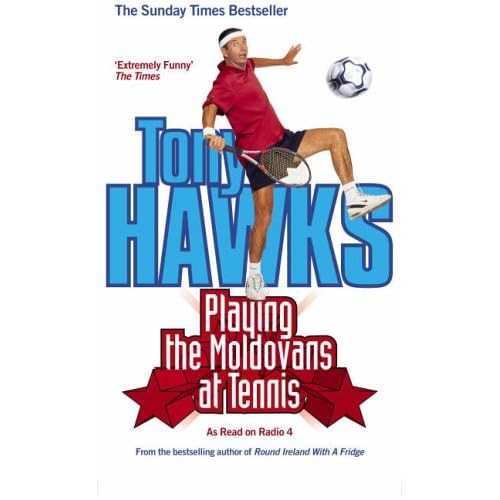
Playing the Moldovans at tennis

I've just finished reading Tony Hawks' brilliant book Playing the Moldovans at Tennis - a story of how a bet in a pub led to adventures all across Eastern Europe.

In short, Hawks bet a friend that he'd be able to beat all members of the Moldovan national football team at tennis. This book records his attempt to do so.

It's a fun read - and there's plenty of good laughs. However, what I particularly loved was Hawks' brilliantly observed descriptions. Although he visited Moldova seven years before me, his descriptions of towns and just Moldova in general ring very true. Perhaps what made me smile most was his descriptions of the ways in which he contended with the fatalist Moldovan psyche. He's generally sympathetic in describing a country very different from our own - a country in transition, and with a lot less hope for the future than we're used to. I think he had a similar experience of Moldovans - wonderfully friendly once you get to know them, and they begin to trust you.

I miss Moldova. In fact, it's the only country in the world I've ever had a lump in my throat whilst leaving. In honesty I don't miss the cold showers, the toilets, the food and the general low quality of life there. But I really loved the people, and I hope I get the chance to return soon, and hopefully many times in the future. It's a very humbling experience as you are made to realise that there are people even in Europe who long for many of the things that we take for granted. The Christians there stick out like a sore thumb because they have hope. And in a country without much hope, it's also a remind that Jesus really is the hope of the nations.

Tuesday, 10 July 2007

More from Moldova

I've heard a little more from the team in Moldova. They're now at the English and Bible Camp, but I received an email from Ebek before she left.

It sounds like a lot of fun with Moldovan food and English lessons, but Ebek sent the following prayer requests:

We leave for camp tomorrow. I think we are all already tired but keen to get out there and serve. Pray that we stay united as a team and that we are effective. The bible studies are superb and it is a great oppourtunity to lead an evangelistic bible study so pray that conversations flow and that hearts are open to hearing the gospel. Also pray for the Christian Moldovans; that they will be keen to get involved and that we will all be united together to be a great army for Christ. As Flick put it - pray that when the little red fellow comes along we will put on God's armour!
The camp is exhausting - emotionally, physically and spiritually - so do keep praying for the team out there.

Tuesday, 3 July 2007

The latest from Moldova

Just received this update from Olivia (a Lancaster CU student, pictured right with Ebek) who is on the Moldova team:

Well here I am again in the little internet 'cafe' (that serves no drinks - as Ebek pointed out so cannot actually be callled a cafe!). Weather is amazing here as usual - and makes a nice change to England! Two days into orientation and we are all pretty tired what with all the seminars and stuff - but still enjoying it all loads none the less. Looking forward to camp. Was lovely to see Natalia, Doina and Ion again. Hoping that some of the students from last year will come back again this year so can catch up. Hope all is going well with you. Liv xx
Let's keep praying for them all!

Saturday, 30 June 2007

Pray for UCCF North West trip to Moldova

For over a decade UCCF staff, Relay Workers and students have headed out to Moldova for the annual 'English and Bible Camp', run by the Moldovan equivalent of UCCF, CSC. This year, I'm unable to attend (being only three weeks into married life) but I wonder if you wouldn't mind saying a prayer for the trip, which leaves today. The photo us of me and some Moldovan students from last year's trip.

The trip will last three weeks. It will take over 24 hours for the team to travel to Chisinau, the capital of Moldova. They'll get together today in Birmingham and then fly out to Bucharest in Romania early tomorrow morning. They'll then face the joy of an overnight sleeper train into Moldova! Pray for safe travel for the team.

Then, from Monday until Saturday, the team will have an orientation week in Moldova, preparing for the camp. As part of this, the team will get to know each other, find out a bit more about Moldovan culture, have some Romanian lessons, learn about God's plan for evangelism and prepare Bible studies from Luke's Gospel. It's an intense and often quite stretching time. Pray that it's a significant and fruitful week spiritually, and that all team members get to know and love Jesus more through the studies in Luke.

The focus of the trip is the English and Bible Camp, that will run from 8th-17th July. This year, 58 Moldovans are expected, two-thirds of them not Christian. Most of them will have read little or nothing from the Bible. The team's job is to teach English classes and to lead the Bible studies for everyone. I found the camp exhausting and very tough, emotionally and physically, but loads of fun! Pray for good relationships across languages, plenty of fun, strength and stamina, and clear gospel teaching. Pray that Christians grow in love for Jesus, and non-Christians repent and believe the good news as they meet Jesus in Luke's Gospel.

After the camp, British students stay in a Moldovan student's family home (a brilliant highlight of the trip). There's then a debrief period ... and long journey home to Britain with plenty of sleep!

Pray for the team: Huw, Cathy and Rachel (team leaders); Olivia, Flick, Ebek, Jo, Becky, Judith, Jess, Philip & Jeremy (students).