Showing posts with label sin. Show all posts

Thursday, 10 September 2009

District 9

District 9 is the much-hyped movie on current release; the current Number 1 in the UK box office, and reckoned to be pushing Star Trek as the premier science fiction movie of 2009.


One of the strengths of the film is the way in which it immediately engages the watcher. Like other recent films, the use of hand-held cameras and footage apparently CCTV cameras breathlessly grabs the audience's attention. About 30 minutes into the film I found myself surprised at the way in which I was so bothered about the welfare of a group of prawn-shaped aliens!

I had a love-hate relationship with the technical sides of the film. Sharlto Copley, in what I believe is his first, role as Wikus van de Merwe (an official charged with overseeing the forced evacuation from District 9 to the purpose-made District 10) is excellent. The scenes amongst the slums of District 9 have been excellently shot, and the special effects and costumes meant that I sometimes had to remind myself I was watching a science-fiction film. On the downside, the swearing in the film felt gratuitous (adding nothing to either plot or characterisation), Wikus' relationship with his wife wasn't developed enough and there was more gore than was probably necessary. Of the group that I saw the film with, some liked it, others didn't.

I once heard one of my heroes, the film critic Mark Kermode, saying that the best science fiction points beyond itself, where aliens are allegories or metaphors of people. And that's clearly in the mind of the film and script writers. The questions that the film poses are obvious: To whom should 'human rights' apply? Is it ever right to ignore a person's human rights? And what are the dangers when a population are treated as second-class citizens? There are also questions posed regarding the philanthropic intentions of multinational companies.

Above all, the fact that District 9 is set in Johannesburg and that it opens with the re-location of aliens from one township to another means that the movie watcher cannot help but associate the aliens with the black population of South Africa under apartheid. (Interestingly, the film opens in the early 1980s, when the aliens arrive over South Africa when, of course, apartheid was still in full force). Yet the politics of the film is far from a direct allegory of apartheid: there are other scenes that seem to echo the Nazi experiments on Jews during the Second World War, as well as the treatment of African-American slaves whilst away from home.

District 9 is an interesting piece. I, for one, hope that a sequel isn't made. An interesting discussion point with friends might be how they would imagine the loose ends of the film might be tied up, and to then discuss what is said about human nature.

Wednesday, 10 June 2009

Playing the enemy: common grace and wisdom

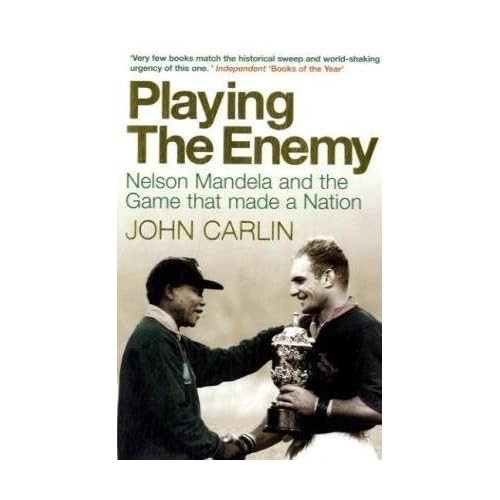
A few weeks ago I read John Carlin's excellent book Playing the Enemy. It tells the story of Nelson Mandela's project of nation building in post-apartheid South Africa, climaxing with the 1995 Rugby World Cup final.

It's rare that a retelling of events in recent history that are in my own living memory can evoke as much emotion as they did at the time. John Carlin's book almost moved me to tears as I was led to appreciate the great significance of the events that formed the Rainbow Nation. I understand the book is to be made into a film, and I should imagine that it will transfer across media very well.

The book is really a biography of Mandela himself. He is represented as a political genius - using his charm and charisma pragmatically to achieve what he wanted, and being very aware of his surroundings. Mandela is quite a hero of mine, and whilst the book sometimes overstates his saintlike qualities, I felt I understood him further after this sketch.

One of the things that I've found myself responding to time after time is Mandela's strategy to always expect the very best to come out of a conversation, even those in situations of confrontation. Time and again, Mandela seems to go beyond reasonable expectation in giving his opponents the benefit of the doubt. He seems to assume that people are generally good - undoubtably corrupted by other influences - but good nonetheless. Here's a case in point of Mandela at work, responding on radio to one far-right opponent Eddie von Maltitz:

For a full three minutes he [von Maltitz] ranted and raved at Mandela - communism that, terrorists the other, the destruction of our culture, civilised standard, and norms. He ended with a brutally direct threat. "This country will be embroiled in a bloodbath if you carry on walking with the Communist thugs."
After a tense pause, Mandela replied, "Well, Eddie, I regard you asa worthy South African and I have no doubt that if we were to sit down and exchange views I will come closer to you and you will come closer to me. Let's talk, Eddie."
"Uh... Right, okay, Mr. Mandela," Eddie muttered in confusion. "Thank you," and he hung up.
[page 151]
I've been made to return to Mandela's strategy on several occasions in recent days. I wonder if often tense meetings would be made easier if we gave our opponents the benefit of the doubt as Mandela did. Mandela's theology seems to imply universal goodness and evil systems. A closer Biblical theology is of universal depravity of all human hearts. But I wonder whether our understanding of this true theological diagnosis of the heart sometimes causes us to put limits on the common grace he has placed into the hearts of all humans, and leads us into unnecessary confrontation and arguments when they might be diffused.

Tuesday, 14 April 2009

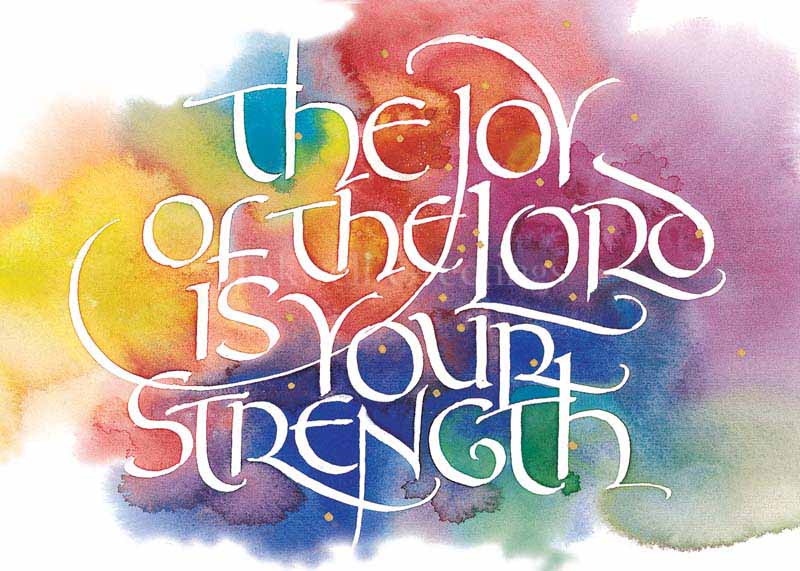
"The joy of the LORD is your strength": reflections from Nehemiah 8

I'm working on a message for later in the term on Nehemiah 8, which is when the Law is read by Ezra to the exiles, who have just finished rebuilding Jerusalem.

Famously, the people are reduced to tears as the Law is read, presumably as they realise that individually and corporately they are rightly under God's curse as lawbreakers.But Nehemiah says that this reaction to what the people have just said is inappropriate, as seen here in verses 9-11:

9 Then Nehemiah the governor, Ezra the priest and teacher of the Law, and the Levites who were instructing the people said to them all, “This day is holy to the LORD your God. Do not mourn or weep.” For all the people had been weeping as they listened to the words of the Law.

10 Nehemiah said, “Go and enjoy choice food and sweet drinks, and send some to those who have nothing prepared. This day is holy to our Lord. Do not grieve, for the joy of the LORD is your strength.”

11 The Levites calmed all the people, saying, “Be still, for this is a holy day. Do not grieve.”
Verse 10 is especially famous, especially the phrase 'the joy of the LORD is your strength'. But why should the people stop mourning and crying? After all, elsewhere in Scripture (in both Old and New Testaments), mourning over sin is presented as a right response to its ugliness and offence to God.

The key is something that it would appear many preachers miss. Nehemiah twice says that crying is inappropriate because ‘this day is holy to our Lord’, and the Levites agree. According to Nehemiah, weeping on that particular day was wrong.

What was the day? Nehemiah 8:2 explains that it is the first day of the seventh month, which Numbers 29:1 explains is to be a festival called the Feast of Trumpets. Numbers 29 also demonstrates that the seventh month was a kind of 'festival month' - jam-packed with rituals and celebrations that together reminded Israel of God's past redemption and forgiveness (and the hope of future redemption and forgiveness). All of this is tied up with the concept of sacrifice - indeed, the high point of the festivals of the seventh month was the Day of Atonement, where a burnt offering and a scapegoat visually demonstrated God's provision for a sinful people.

And so when Nehemiah says that in the light of the people’s conviction of sin that they should rejoice and not grieve, he’s not saying that the people’s sin doesn’t matter. Nor is he saying that times of grief and mourning about sin are wrong. Rather, what Nehemiah is saying is that to see sin against God as the end of the story to have a wrong view of the big picture. And it’s of that big picture that the seventh month spoke to the people.

And so Nehemiah is saying to the assembled throng: ‘Folks – it’s the Feast of Trumpets. It’s the celebration of the beginning of the seventh month – the month which speaks of how sin isn’t the last word. So stop grieving and start celebrating!’ It would be a bit like meeting someone on Easter Sunday that is gloomy and miserable. You ask them why, and they say, “Because of my sin, Jesus ended up on the cross.” And whilst that’s right and true, you’d want to say, “But it’s Easter Sunday! Today we’re remembering our wonderful Saviour and Redeemer who took our judgement and beat death. Mourning sin isn’t appropriate today. Think about the big picture to which today points.”

Nehemiah 8 is not teaching that grieving sin is wrong. Rather, Nehemiah 8 teaches that if grieving sin never leads a person to Jesus (and to experience the joy of forgiven sin that Jesus offers), we have got our understanding of God's big picture very wrong.

Thursday, 9 April 2009

The Damned United: the idolatry of ambition

The Damned United concerns Brian Clough's ill-fated 44 day stint as manager of Leeds United. Based on fact but no doubt embellished, the film places the seven weeks Clough spent there as manager in the context of his long-running rivalry with Don Revie.

Michael Sheen is, again, brilliant and Timothy Spall provides excellent support as Clough's number 2, Peter Taylor. There's a good script which highlights Clough's arrogance, wit and pomp. The film is quick moving and held the attention even of my football-tolerating-at-best mother. There's also some beautiful photography work (my favourite scenes were those set in Brighton) which captures what I imagine the spirit of the 1970s to be perfectly.

Clough is portrayed as a flawed genius - to those of us know who anything about the man, no surprise there. His genius and his flaw root from the same place: Clough's great ambition and associated arrogance. Positively, these drive Clough to excellence and brings great hights. Negatively, they are pictured as destroying relationships with friends, family, rivals and colleagues - and lead Clough himself into misery and bitterness. (This is particularly shown in the rollercoaster-type relationship Clough has with Peter Taylor; particularly tragic to those who know how this relationship finished in real life). In short, success becomes Clough's god. He is pictured as willing to do anything in order to achieve it - and cannot live without it.

Success is something which is not wrong to pursue, nor is achievement. But The Damned United reminds the viewer that when these become ultimate, hurt of oneself and others (and regret) are bound to follow.

Tuesday, 24 February 2009

Justification and sanctification

I spoke tonight on James 2, a tricky passage on the relationship between faith and works. It is the passage that infamously caused the young Martin Luther to label James 'the epistle of straw' (a view that he later rescinded) because he thought it threatened the doctrine of justification by faith alone through grace alone in Christ alone.

I came to the conclusion that when Paul is attacking ‘justification by works’ he is attacking the view that anything we do along with faith can be credited to us as righteousness; that it is only through faith in Jesus that anyone can obtain a ‘not guilty’ verdict when we become Christians. Works are not needed to receive justification. But when James affirms ‘justification by works’ he means that works are essential in the ongoing life of a Christian: they are how authentic faith shows itself. Works confirm and prove the reality of the faith which justifies. In that respect, faith without works cannot justify.

I found this vintage quote by CJ Mahaney perceptively clear and helpful in this context (particularly the bottom paragraph):

'Justification refers to a Christian’s position before God. The moment you were born again, God justified you. On the basis of Christ’s finished work, God thought of your sins as forgiven and declared that you were righteous.

Sanctification, on the other hand, refers to our practice before God. It is the ongoing process of battling sin and becoming more like Jesus. Though sanctification is the evidence and goal of our justification, we must never see it as the basis of our justification. Here’s where so many Christians get confused. They try to earn what has already been given to them as a free gift. As Martin Luther stated, “The only contribution we make to our justification is our sin which God so graciously forgives.”

There are other vital distinctions. Justification is about being declared righteous; sanctification is about becoming more righteous. Justification is immediate; sanctification is gradual. Justification is complete the moment God declares us righteous. It does not take place by degrees. Sanctification, however, is a process that lasts as long as we live. Finally, while every Christian enjoys the same degree of justification, we vary in terms of sanctification. You will never be more justified than you are at this moment, because justification is an act of God. But by God’s grace, you will become ever more sanctified as you cooperate with God’s Spirit in the process of change.

Though it’s important to distinguish between justification and sanctification, these two doctrines are inseparable. God does not justify someone without sanctifying him as well. Sanctification is not optional. If one has truly been justified, that will be evident by a progressive work of sanctification in his life.'

(From Why Small Groups?, pages 4-5)

Tuesday, 28 October 2008

Questions to help read and respond a film from a Christian perspective

Today the Relays and I went to watch City of Ember as part of their ongoing discipleship programme (we have a 'culture day' once a term in Relay supervision time). It was the first time that any of them had been encouraged to 'think Christianly' about a film.

We based our discussion afterwards on some of Ted Turnau's suggested questions. I think they're really useful:

1. What was your immediate reaction to the film at its close?
2. What's the story?
3. What sort of 'world' has the film-maker asked me to enter?

(a) What counts as good or bad or beautiful or evil or unacceptable in this world? What makes relationships in this world work or fail?
(b) How has the film-maker built up this world?

  • How does the movie's first shot introduce the world? How does the last shot leave us with a lasting impression?
  • What were the recurring images or visual motifs?
  • What patterns were there in the dialogue? How did characters interact? Were there words or phrases that were repeated?
  • How does the film use music to guide you to know how to respond?
  • How do characters grow and learn and change? (this is known as a 'character arc' and is a good pointer towards the message that the film maker is seeking to make)
4. What’s true, good and beautiful in this film? Because the film is made by people in God’s image, there will be moments when the truth shines, where beauty is unveiled (what Turnau calls ‘the footprints of God’). What elements of God’s grace do we see?
5. What’s false, ugly and perverse? Where does the movie lie? Film worlds are a mixture of grace and manipulation, truth and lies. A film's lies will betray where its root idolatry is. (Often there is a direct relationship between where common grace is strongest and idolatry e.g. a chick flick celebrates romance, but often presents it as the one thing to live for).
6. How does the gospel apply (or give an answer)? (the gospel provides real answers to desires).

As it goes, we had a great discussion about City of Ember. It's an enjoyable film that has much truth in it: it speaks of how political power can corrupt, and of how religion, banality and busyness can often prevent communities from tackling their problems. Free thinking away from the control of governmental institutions is commended, and there is a real desire for humans to truly engage with the problems around them.

However, we found the solution that City of Ember commends somewhat shortcoming. Essentially human achievement is elevated, and the film implies that youthful people untainted by indoctrination would succeed in building a perfect community, if it were possible to start again on the earth. (Interestingly, the film ends in a kind of 'new creation', with the sun rising and a chance to start from scratch).

Jesus was much more radical in his diagnosis of the human condition. He knew that even if children were placed in a perfect new world, that without being born again, it would be soon ruined. The root problem - the problem of our hearts - needs to be dealt with. That is the promise of the Christian gospel: not that we refuse to engage with the problems around us (like the quasi-religious characters in the film), but that we turn to Jesus as the only one who can give us new hearts. We long for a new creation and a fresh start - but one where 'the former things have passed away'.

Thursday, 21 August 2008

Jesus on the wrong view of sin

A reflection on Mark 7:1-23.

As this passage opens, we read of an argument about purity. This isn't just a discussion about hygiene - it's one of religious cleanliness.

Jesus is confronted by the Pharisees. Jesus has evidently told his disciples that they don't need to obey the oral Torah and the other extra-Biblical regulations that the Pharisees have added to those of Scripture. To the Pharisees, this is something that rebounds on Jesus' own view of purity ("Why don't your disciples live according to the tradition of the elders instead of eating their food with 'unclean' hands?").

Jesus' reply is strong. The Pharisees have placed their own traditions about the revelation of Scripture. Worse still, they set aside the commands of God through their own traditions that were intended to help them to keep it! They weaken the demands of the Law through adding their own regulations!

How is this possible? It's because the Pharisees have a wrong view of sin. A wrong view of sin will inevitably mean that you seek to combat it in a way that appears effective to you. The Pharisees ineffective view of sin meant that they settled for an ineffective way of dealing with it.

This is underlined by the fact that Jesus calls the crowd to him in verse 14. Previously, this had been a discussion with only disciples and Pharisees present. Calling the crowd to him emphasises the big teaching point that Jesus is about to make. It's this: "Nothing outside a man can make him 'unclean' by going into him. Rather, it is what comes out of a man that makes him 'unclean.'" First of all, this must have sounded like toilet humour. But Jesus' point is serious and grave, as he clarifies in verses 18-23.

The Pharisees' problem is that sin is something outside of them. It's as if in their cores they are good. Sin is 'out there' - and so it can be controlled by manipulating your environment. To avoid being made unclean by sin, I avoid going to and doing things that might defile me. To the Pharisees, sin is something like a tropical disease I could catch in certain countries. The antidote? Don't go there.

Jesus' diagnosis is much more radical. Sin comes from inside us, from within, out of our hearts. We can't manipulate our hearts in the same way as we can manipulate our environments. We can't control our sin ourselves. And so, implies Jesus, a much more radical cure is needed.

A few weeks ago, I wrote of how there is widespread confusion on the nature of sin. Many Christians are unsure of exactly what sin is and so look in the wrong place for its antidote.

Legalism and sanctification-by-keeping-the-rules sprouts from an inflated view of human nature and the belief that sin is 'out there'. A friend I know refuses to go to the pub because of fear of somehow getting 'infected' there. A few years ago, I remember a friend once saying that she thought that open accountability relationships with other Christians are the primary way of ridding sin from our lives. Don't get me wrong - I think accountability is good and beneficial (when people enter these relationships with the right expectations). But we are close to being Pharisees if we think that will somehow deal with our sin: it's an evangelical way of seeking to control our circumstances to become 'clean', that implies that sin is 'out there' rather than 'in here'.

Let's not forget the far more radical (and only successful) alternative that Jesus offers to deal with sin as it really is.

Thursday, 31 July 2008

"Sin and God are correlative terms"

One of the sessions that we ran during our orientation before the 'English and Bible Camp' in Moldova was a session on what is the gospel. I was really keen that this session was stretching and went beyond the often quite reduced form of the gospel presented in some of these sorts of seminars.

One thing that emerged very clearly in the session was a lack of clarity on the nature of sin. It seems that many people have unintentionally adopted quite an 'Islamic' view of sin: that is, that people are mainly good (not mainly bad), and that sin is defined by the bad things we do - a set of black marks, if you like. Islam rejects any form of original sin and, given that humans were never in a relationship with God, the Islamic view of sin is not associated with rebellion against God. But to hold onto a quasi-Islamic view of sin will lead you to an anaemic form of Christianity.
Here are a few implications that I can see:

Atonement theology. Within Christianity, sin is presented as a wilful heart attitude in rebellion against God. I'm struck by the number of times that Jesus presents sin as a disease (think, for instance, of John 3:14-15 in context, and Mark 2:17) - there's nothing that we ourselves can do to free ourselves from this attitude of rebellion against God. As Will Metzger puts it, we find ourselves playing God: running our lives as if God did not matter; ignoring God; trying to be self-sufficient and self-made people - and also fighting God: wanting to decide for ourselves what is right and wrong. Sin and God are correlative terms. Rebellion is part of who we have become by nature. And so this leaves us with two interconnected but separate problems:

1. Somehow, we need to be forgiven by the holy and just God for our sinful actions that have flowed from our part hearts.
2. We need to be given new hearts so that we no longer keep rebelling against God.
Both of these things are necessary - we see that the death and resurrection of Jesus not only needs to bear God's wrath, but also to give new life. If the cross and resurrection dealt with only one of these problems, our atonement would be incomplete. Whilst we hold onto to a quasi-Islamic view of sin these things are not seen in clarity.

In our evangelism. We are likely to equate a guilty conscience in a person with conviction of sin. If a person admits that they are not perfect, we'll think that they recognise themselves to be sinful. But, as we've seen, conviction of sin needs to include an awareness of a wrong relationship with God, a sense of helplessness to do right, and therefore a consequent need of a new heart. We need the Spirit to show people that they are not only imperfect - but that they are sinful. The proclaimed gospel makes little sense if this point on sin is missed. Non-believers with a high view of humanity will miss the point of the gospel so long as they don't realise the gravity of the situation they are in. Rather, we must show them that God demands punishment for our sins and we can do nothing to avoid that punishment (because we keep sinning). We need to show them our complete hopelessness outside of Christ.

"I believe that much of our evangelistic and personal work today is not clear simply because we are too anxious to get to the answer without having a man realize the real cause of his sickness, which is true moral guilt (and not just psychological guilt feelings) in the presence of God." (Francis Schaeffer).

The holiness of believers and their sanctification. So long as we hold to a quasi-Islamic view of sin, we're likely to think that we're pretty good people. I'm likely to come to times of confession and look out for things that could be held as 'black marks' against my name. However, once I see sin as relational - as failing to love God and to treat him as God, my view of what is 'sinful' is expanded. I'm not only going to see trangressions as sin, but I'm also going to be aware of how I've failed to be like Christ and how I've failed to live with God as my God. I'm also going to be driven more regularly to the cross and I'll be more deeply amazed by the love that God has shown me.

Tuesday, 6 May 2008

Romans 1:18-32

I'm speaking at a CU later this week on Romans 1:18-32. It's the first time that I've spoken on this passage, and I'm somewhat nervous, so would love to hear any feedback or helpful comments that you can give.

You’re in water and a safety line is winched down from a helicopter. Do you grab hold of it? The answer to this question, of course, will depend upon your situation. There’d be little point grabbing hold of it if you were in a paddling pool. You’d be much more keen to grab hold of it if you were drowning in the Atlantic.

The main point of Romans 1:18-3:20 is to show that all members of humanity – even those that might consider themselves good or religious – all of them are condemned without the cross of Christ. And so Paul spends two and a half chapters demonstrating the guilt of every member of humankind. And just as you wouldn’t grab hold of the safety rope if you think you’re already safe, you won’t cherish and rely on the sacrificial death of Jesus until you realise that, without it, you are in grave peril. And so Paul writes these opening chapters of his letter to the Romans, wanting every person to realise that, whoever they are, by themselves, they are in serious trouble.

God’s anger with our rebellion against him (verses 18-23)

Our first point tonight takes us to the heart of the problem. Outside of the cross, every member of humanity is in serious trouble because – verse 18 – God is angry. We read that ‘the wrath of God is being revealed from heaven against all the wickedness of human beings who suppress their truth by their wickedness.’ God is angry. Now, there’s a lot of people who don’t like the idea of an angry God. And I think that’s because they’ve got human anger in mind when they think about God’s anger. Human anger tends to flare up. Even when the thing that prompts the anger really does deserve that reaction, the heat of the moment and all the impulse and the emotion turns anger into a really ugly thing. The response of anger isn’t righteous.

But God’s anger is different. It is his personal and settled hostility against everything that is wrong. Think about the situation in Zimbabwe and it might well make you angry. And you’d be right to be angry, because what is going on there under the Mugabe regime is very wrong. We’ve seen the damage caused by the irresponsibility and false government of many there. And it’s this sort of ‘cold light of day’ anger – removed from the reach of human sin – that characterises God’s anger. He opposes things in his world that are very, very wrong.

Read on in verse 18 and we see why God is angry. ‘The wrath of God is being revealed from heaven against all the wickedness of human beings who suppress the truth by their wickedness.’ In other words, God is angry because of human deception. God is angry because humans know something, but that we have wickedly and deliberately chosen to suppress this truth, to consciously ignore it.

Verses 19-23 outline this make-believe world that we’ve created for ourselves. It’s this – that we know all too well of God’s existence and power, but that we’ve neither glorified God nor given thanks to him. Verse 20 makes it clear that everyone has enough evidence for God’s existence. ‘For since the creation of the world God’s invisible qualities – his eternal power and divine nature – have been clearly seen, being understood from what has been made.’ The atheist philosopher Bertrand Russell was once asked what he would say to God if, upon dying, he found out that he’d been wrong all along, and that God actually existed. His answer? He’d say, “Not enough evidence, Lord; not enough evidence.” These verses show that, in truth, there is plenty of evidence proving God’s existence. And that evidence is found in creation. Paul’s argument is this: open your eyes and you have evidence of God’s existence. Walk through the Lake District or along the Welsh coast, look down a microscope or a telescope – and you have all the evidence that you need for God’s existence. We may disagree about precisely how God created, but the evidence is irrefutable. Create he did.

But the extent of our deception is unpacked in verses 21 onward. Deep down, each of us knows of God’s existence. Each of us knows his ‘eternal power and divine nature’, as verse 20 puts it. But here’s what twisted humans do with that knowledge. We say to God, “Stuff you!” In particular – look at verse 21 – we neither glorify God in the way that he deserves as God, nor give thanks to him. In refusing to glorify him as God, we deny God’s right to rule over us as our Creator. Somehow, we think that the universe revolves around us – we’re masters of our own worlds! It doesn’t occur to us that God, our Creator, might have something to say about how we ought to live in his Universe. Moreover, we refuse to give him thanks. Despite the truth being that we rely on God for everything – for our bodies, for the food he has given us, for our every breath – we don’t him thanks. We live as though everything belongs to us, that it’s our universe.

And so, do you see the delusion? The reality at the centre of the Universe is the living, Creator God. And how have we treated him? We’ve treated him as a joke. We’ve twisted the truth and denied him and considered ourselves accountable to no-one.

And this is true of you even if you’ve always believed in God’s existence. It’s possible to believe in God’s existence, yet still to reject his right to rule over us as God, and to refuse to give him thanks. Imagine a family where a teenager takes everything from his parents, never says thank you, and in practice his life without reference to them. It’s not very likely that said teenager will go around saying, “Mum and Dad don’t existence.” Rather, he’ll show through his actions that, whilst he’s very happy to take their money and their gifts, he’d rather than they weren’t there. He’s accountable to no-one but himself.

Tragically, it gets even worse. Paul explains that our rejection of God causes us to live for something else. We were created to live for God – but we’ve rejected him. And verse 23 speaks of how rejecting God doesn’t leave us in a vacuum. Instead, we live for something else. We devote our attention elsewhere. Verse 23 speaks of images and created things. More than likely, Paul’s original readers would have been reminded of Israel’s worship of the golden calf in Exodus 32. But this description of idolatry applies no less to our present day idolatry. It’s said that an idol is something other than God that gives a person’s life purpose and meaning. With that in mind, it’s perhaps easy to see what the most common idols are today. Pleasure, sex, being respected for having money, power and influence over others, a husband, the list in endless. And Paul would say this: it is a sign of human twistedness that, in a world where God has made himself clearly known, we think that, say, having trinkets or being cool, is the most important thing, the thing that we live for.

And so this is the problem. All humans have deliberately chosen to live out the delusion that God isn’t really there and we’re not really accountable to him. And that leaves all of us – verse 20 – without excuse. None of us can say that we didn’t really know that God was there, and none of us can say that we’ve glorified God and thanked him as we should have done. And in response, God is wrathful. He is angry.

There’s perhaps a bit of you that wants to say, “What is God’s problem?” OK – so we’ve ignored him and not thanked him. But sometimes each of us has known that very same experience. Sometimes people don’t thank us when we’ve done things for them. And so sometimes we’re tempted to think that God is a Nietzsche-like dictator who says, ‘Worship me’ – and then gets upset when people don’t. But the difference is this. Dictators are not worthy of worship. They’re just people. That’s why when dictators call for worship, it’s ugly. It’s subverting the reality of how things really are. But God is the Creator. He really has given us all things. We really rely on him for everything. He really is worthy of worship. He really does have the rights to call the shots in his Universe. And when we rebel against him, the whole moral order is thrown out of kilter. Things that were designed to be very good become very bad. The world is broken. And that is why God is angry with our delusion.

God’s response to our rebellion against him (verses 24-32)

The remainder of the verses in our passage show God’s response to our rebellion against him. In other words, they are a description of how God’s wrath – his anger against us – is manifested today. And the key phrase is ‘God gave them over’. It recurs in verses 24, 26 and 28, and describes three ways in which God’s anger is made known in the world today.

The first way is described, then, in verses 24-25: ‘Therefore God gave them over in the sinful desires of their hearts to sexual impurity for the degrading of their bodies with one another. They exchanged the truth of God for a lie, and worshipped and served created things rather than the Creator – who is forever praised. Amen.’ In other words, the first sign of God’s anger is that he simply leaves humans to their own desires. God’s judgement upon a world that abandons him is not to intervene at all; to let humanity live with their actions. We were made to live with God – in him, we find our reason for existence and our satisfaction – and, without him, we are impoverished. To let humans go on rejecting him, then, is part of God’s judgement on initial human rejection. And, above all, Paul singles out the moral uncleanliness that God lets humans pursue, including sexual degradation, that we’ll come to in a moment. Paul’s point is this: we should be able to look at the world and it’s twisted morality and all of the consequences that go with it and realise this: God is angry with our rebellion against him, for having ‘exchanged the truth about God for a lie’.

The second way that God’s wrath is shown is described in verses 26-27: ‘Because of this, God gave them over to shameful lusts. Even their women exchanged natural relations for unnatural ones. In the same way the men also abandoned natural relations with women and were inflamed with lust for one another. Men committed indecent acts with other men, and received in themselves the due penalty for their perversion.’ Here’s the second judgement of God only a world in rebellion. No lightning strike from heaven – but, again, God simply leaves humans to their vile and twisted passions. And that brings us to probably the most politically incorrect part of our passage. Paul says that homosexual sexual relationships are proof of just how sick and twisted humanity has become.

Now I think it’s important to say here that Paul isn’t saying that homosexuality is the unforgivable sin, nor is he saying that practicing as a homosexual is any more sinful that other forms of rejecting God. Paul is not saying that being attracted to members of the same sex is necessarily sinful. He’s certainly not saying that homosexually oriented people can’t be Christians. And Paul would have had no time at all for homophobia. Rather Paul’s emphasis comes on the world ‘natural’. Biologically-speaking, and in the Genesis account, we read that sexual relationships were designed to be heterosexual. And so Paul turns to homosexuality as a vignette of how ‘unnatural’ a world in rebellion to its creator is. Bodies are used in ways that they were not designed to be used. The fact that there are men who have sex with other men, or women with other women, is proof of how twisted and broken humanity has become through our rejection of God. Sex becomes something that falls short of God’s good design. A very good and natural and intimate thing is smashed and ruined. And that is proof that God is angry with rebellion against him.

The third symptom of God’s anger is described in verses 28-32. Once again, we read that God ‘gives over’ humanity to the choices that we have made. Let’s re-read verse 28: ‘Furthermore, since they did not think it worthwhile to retain the knowledge of God, he gave them over to a depraved mind, to do what ought not to be done.’ In other words: since, as humans, we have felt that we don’t need to retain God in our knowledge; since we have felt that we can live in God’s world as practical atheists, God has let us live with the consequences. This time Paul speaks of how our minds have become corrupted. It’s like we’ve got a virus. We’re infected with sin. We make bad choices. We are genuinely ‘spiritually insane’. Matthew Henry describes the fallen mind as ‘a mind void of all sense and judgment to discern things that differ, so that a person cannot distinguish their right hand from their left in spiritual things.’ In other words, we’re out of control of our lives. We keep rebelling against God. In the name of ‘freedom’ we reject him, and our choices are foolish. And we have to live with the consequences of our rebellion.

And so the implication is this. If any of the words in verses 29-31 describe you, it means that God is angry at your sin. And just notice that the list here includes ‘socially acceptable’ sins right along with those considered socially unacceptable. Let’s look at just a few. Look at the number of words that describe dysfunctional human relationships, described in the middle of verse 29: ‘envy, murder, strife, deceit and malice’ – these are all expressions of hatred against other people. All of them, in some way, are articulations of murdering others in our hearts. Sure, most of us would never actually murder someone, but we can cut someone to pieces with our words and show them that we’d rather they were there at all. And that behaviour is a sign of God’s wrath on a rebellious humanity.

I find the phrase ‘they invent ways of doing evil’ chilling. Such is our rejection of God that we dream up ways of getting people back when they’ve wronged us. Or we want to see others exposed. And that ties in with verse 32: even when we know a behaviour is wrong, we approve of it and continue to do these very things. Another sign of God’s wrath on a rebellious humanity.

Or also included is the charge of being disobedient to one’s parents – and the flipside ‘without love’. This word speaks of family love: it speaks of parents that are unkind and cruel to their children. The family, of course, is not a social invention, but was created by God as the building block of society. And these verses speak of that being broken. Dysfunctional family relationships – children that are disobedient to their mother and father, and unloving parents – are proof of God’s wrath on a world in rebellion against him.

The point is this: none of us can read these words and say that none of them apply to us. If any of them describe you, it shows how corrupt and twisted your mind has become. And that shows that your attitudes and decisions have rightly put you under the judgement of the God of the Universe. You rightly face his wrath for eternity.

Conclusions

I started this talk by saying that Paul seeks to demonstrate in this section, and over the following chapters, how serious our situation is. We’re not in a paddling pool. We’re drowning and we’re about to go under. Our situation is serious. Paul’s begun to show us just that, and he’ll continue in chapters 2 and 3.

And so what are the implications of this passage? Well, firstly, I think we see our need in real clarity. It is this: both our sin and God’s righteous response of wrath prevent us from experiencing our humanity and creatureliness and having a relationship with God. Without God’s wrath being satisfied, we’d all still face hell – as God’s justice must be done. Without our nature being changed and made new, we’d go on sinning for eternity and there’d be no way we could live with God in his new creation.

But Paul is convinced that the gospel message can meet both of these needs. Look back at 1:16: ‘I am not ashamed of the gospel, because it is the power of God for the salvation of everyone who believes.’ Paul is saying this. There really is something to be saved from, and the gospel really does save. In coming weeks, you’ll see how God has intervened to save us. You’ll see how, in the person of Jesus, the wrath that we rightly deserve was taken upon God himself. Anyone that is trusting Jesus is condemned no longer, because he was condemned on our behalf. And our natures have been so radically changed that Paul will go on to describe the person trusting in Christ as being ‘new’. Even our minds, which we’ve seen are completely corrupt, can be renewed. What drove Paul to write Romans was a conviction that the gospel is our only hope when it comes to dealing with our sin and with God’s wrath. It’s that conviction that will lead you to love and cherish the cross of Christ too.

If coming into tonight you’d not have really described yourself as cherishing the cross, will you come clean? Will you admit that you are in far more serious trouble than you had previously realised. Because it’s at this point that you’ll begin to appreciate the amazing love and grace of God – that same God that we’ve rebelled against and rejected and ignored – in giving us everything to reconcile us to himself, making the relationship that we were created for possible to enjoy for eternity. That offer is open to everyone, whoever you are, whatever you are like. Christ died to bear our wrath and to free us from our sin.

The final implication cuts to the heart of what you’re here for as a Christian Union, offering hope to this college. What this passage shows Christians is that as you share the gospel here, you must talk about sin and God’s wrath. I know that this isn’t a popular idea, but without hearing about these things, your friends will not realise how serious their problem is. They will not cling to the cross. They will still think that they are in a paddling pool, without need for a safety line. The Christian writer John Stott put it like this, ‘What keeps people away from Christ more than anything else is their inability to see their own need for him or their unwillingness to admit it. Jesus himself put it this way: "It is not the healthy who need a doctor, but the sick. I have not come to call the righteous, but sinners" (Mark 2:17). We only go to a doctor when we admit that we are ill and we can't cure ourselves. In the same way, we only to go to Christ when we admit we are guilty sinners and we realize that we can't save ourselves.’

Monday, 21 April 2008

Lessons from Judges 1

I’ve been working today on a small group study on Judges 1:1-2:5. Judges isn’t a book I know very well, and so it’s been a joy to dig into this challenging chapter.

Essentially this section of Judges needs to be read within the context of God’s promises to Israel about the invasion of Canaan that he makes throughout the books of Numbers, Deuteronomy and Joshua. In these books, God promises the land to be a gift to the people of Israel, where they will experience his blessings and rest. He warns the people to ruthlessly remove the pagan peoples and their idols from the land; both as a form of judgement against their sin (see Genesis 15:12-21), and to free Israel from the temptations of idols and other false gods. The land is to be a place where God’s people willingly submit to him as their ruler without distraction (see Deuteronomy 12:3 and Numbers 33:50-56).

The book of Joshua is generally positive: the people enter the land, win victory after victory under Joshua as they trust in the LORD’s promises and strength, and experience something of his peace, rest and blessing. Judges, however, opens with the death of Joshua. Although the people’s immediate response is to enquire of the LORD and to obey him (Judges 1:1-7), things soon fall apart.

Judges 1 is the sad story of how the tribes of Israel fail to drive the people and their idols out of the land of Canaan for the sake of convenience and ease. The Israelite tribes continually make the indigenous tribes merely subservient to them, rather than ridding them from the land completely. In doing so, not only do they settle for ‘second best’ in the land, but (more worryingly), they disobey the very God that delivered them from Egypt. God’s sad verdict comes at the beginning of Chapter 2: Israel has not obeyed his voice – and for that, they will suffer. The indigenous tribes will never be driven out; they will be thorns in Israel’s sides and their gods will be a snare, just as God had said they would (Numbers 33:55).

Here are some implications for us that I think we can make from this sad story:

  • God’s justice must be done. He is a God of justice and demands that justice is brought about. This is seen in microcosm with the story of Adoni-Zedek. Romans 3:25-26 say that God would act ‘out of line’ with his character if he were not to punish sin. The amazing thing is that, in Christ, he is just and the justifier of the guilty.
  • The failure of the people of Israel to love and treasure the LORD God in the land shows that a more radical change is needed: a complete change of heart. This, of course, was the change that Jeremiah prophesied (Jeremiah 31:33), brought about as a person is ‘born again’ through the cleansing of the cross. In Christ, a Christian is a ‘new creation’ – and we long for our bodies to be redeemed and made new too.
  • Although Christ has taken the punishment of the sins of those who have placed trust in him, we still have to face the consequences of our sin. The people of Israel had to live with the consequences of rejecting God in their lack of ruthlessness against idolatry. We, too, may face serious consequences when we disobey God, disbelieve his promises and fail to deal with the idolatry of our hearts.

Sunday, 13 April 2008

The ridiculousness of snubbing grace

I'm still 'coming back down' from being at the awesome New Word Alive conference in Pwllheli. We had a great time. This post isn't going to be a review - for that I suggest you check out Adrian Warnock's blog or posts like this one that reflect on the place of the conference in the future of evangelical Christianity in Britain.

What instead I want to write about is a reflection that I had on site during the week, following Terry Virgo's excellent talk on the opening night. Terry expounded verses from Romans 5 and Romans 7. He reminded us of how the law is like a demanding marital spouse that never lifts a finger to help us. What's more, the law is always right and will never go away! But good news, of course, is that we have died to the law and now have a new 'marital relationship' with Christ. We were also reminded of how we cannot be saved by the law, and how the law cannot change us either. Grace is how we are saved, and grace is how we are changed. Grace is absolutely central.

The following day I reflected on how far we often drift away from this message. I know it from my own life - as so often I fall into legalism, as so often I trust in rules to change me, and as so often I am completely unbothered by my sin. And as I chatted with old friends, I was reminded by how hard it is for Christians to stay committed to grace. One friend in a church situation where they preach salvation by grace but practice grace by law. Another friend spoke of the condemnation she feels at the hands of the judgemental Christians around her. The message of grace is, in so many ways, so simple - and it is so good and so liberating - and yet we drift from it so quickly; as individuals, as organisations, as churches.

I think that this is perhaps the epitome of sin. We are told that God has done everything to cancel the penalty of sin. We are told that he alone as expert surgeon can free us from the power of sin in our lives through Word and Spirit. He is everything we need - and he alone can give it. And so as I walked through the site at Pwllheli I was struck again by how sad and how pathetic it is that we turn back to ourselves and our own efforts to save and to sanctify ourselves - something that we can never hope to acheive by ourselves, snubbing the God who can.

Thursday, 28 February 2008

Search for Hero Inside Yourself (Mark II)

Tonight I gave a talk at one of the Lancaster small groups on the film Evan Almighty, which until today I'd never seen.

I suppose it was a reasonable film, with some funny one-liners and was fairly entertaining.

What the film did well was expose sin: the main character, Evan, and one of the supporting characters, Congressman Long, both rule God out of their lives and in so doing make a mess of things - including their own lives, the lives of other people and the planet. It was interesting seeing a film that closely linked environmental degradation with sin.

However, if the film was good at exposing the fundamental human problem, the solution it put forward was not good. Essentially it was this: just do more random acts of kindness. If God's design is best for us all, just do it. This (bizarrely!) is how the film interprets the story of the Flood and Noah's Ark. In other words, we're still to search for the hero inside ourselves.

Of course, that sounds great - but it's completely unrealistic. I can't just pull up my socks and be nice. I need a complete change of heart. And that's where the film is devastatingly quiet: there's no mention of Jesus. And so there's no hope of the radical change that my heart requires.

Thursday, 10 May 2007

Spiderman 3: 'The greatest battle lies within'

Today I went to see Spiderman 3. I'd not actually had the chance to see either of the previous Spiderman films, and I have to admit that my expectations for it were fairly low, but I came away both entertained and pleasantly surprised by the film.

For one thing, Spiderman's latest outing includes more food for thought that your standard action movie. Another very obvious thing was that there were interesting questions about Spiderman's motives. Just as in the latest Bond film, 'Casino Royale', James Bond was portrayed as far from perfect, Peter Parker and his alter-ego Spiderman didn't exactly come out whiter than white either. It's an interesting thing that postmodernity seems to have brought to our attention: rarely (if ever) is anything or anyone ever objectively 'good' or objectively 'evil'.

The sub-title to Spiderman 3 is 'the greatest battle lies within', and so the film sees Spiderman wrestling between good and evil desires within. Spiderman can choose his customary red suit, or an alien-compounded black suit that exacerbates one's own evil nature. Although he admits that there is something appealing about the black suit, Spidey eventually chooses good over evil. The moral lesson at the end of the film is that, 'we always have choices and it is the choices that define who we are'.

I came away thinking about two things that came out powerfully in the film. Firstly - forgiveness. The film sees Spiderman forgiving the man who shot his uncle to death because, as the Spiderman character admits, 'I've done some pretty bad things too.' Spiderman forgives because he recognises that he too needs to be forgiven. To withhold forgiveness of other people is therefore hypocrisy if we expect to be forgiven. Of course, this was something that Jesus taught time and again (see Matthew 18:21-35), particularly with regard to our forgiveness from God. Those who need forgiveness then have a basis for forgiving others.

My second line of thought followed Spiderman's evil nature, that was brought to life by the black suit. Eventually the suit is destroyed as Spiderman chooses good over evil, in stark contrast to one of the other characters in the film (someone who, actually, is very similar to Peter Parker). New York can live happily ever after. Or can it? Because presumably the evil latent inside Parker lies there to be abused in the future. Spiderman 3 correctly diagnoses the problem - 'the heart of the human problem is the problem of the human heart' - but unfortunately can do no more. Spiderman's evil remains there, just as it lies in each of our hearts. Praise God that Jesus came, not to condemn us but to bring us new life and new hearts (John 3:8).