Monday, 10 September 2007

Some reflections on Forum

So Forum 2007, entitled Transmission, has been and gone. 800 Christian Union leaders gathered at the Quinta for a week of praising God together, teaching, praying and looking ahead to the new academic year.

I think it was a wonderful time, and it might even have been my favourite of the Forum gatherings I've so far had the privilege of attending. Here are a few thoughts that I've had since I've been back:

Brother Andrew was incredibly inspiring. I'd re-read his book God's Smuggler whilst on holiday, and he was even more rousing in person, as he shared stories of sharing the gospel in the Islamic world, including with the Taliban. I guess I wouldn't completely sit happily with his theology of guidance, but I came away from his sessions realising how much more prayerful I need to be, and excited by the doors that might open if I was more reliant on God in prayer in this way.

Linked to this was a strong emphasis on world mission in this year's conference. UCCF has been at its strongest historically when world mission has been a key influence in all that we do. Brother Andrew and Lindsay Brown both spoke passionately about the gospel to the nations, but this concern for God's glory around the world came out in many other sessions too.

The teaching from Romans by Hugh Palmer felt really fresh. I'd never heard Hugh Palmer preach before, but he brings remarkable clarity in his teaching. His talk on Romans 8:12-17 was a particular personal highlight. Although I don't really feel like I'm suffering very much at the moment, I know that I have no need to fear. Our present suffering is not worth comparing with the glory that will be revealed.

I was struck time and again last week of how wonderful it is to be a part of UCCF. In particular, I was reminded of how awesome it is to be surrounded by people that love to speak about God's grace - fantastic for the soul! A particular way in which this was shown was in the third part of Tim Rudge and Alison Williams' Dig Deeper training track, which looked at sanctification (being made more holy) in the light of our justification (having been declared righteous). It's brilliant being around people who are so passionate about standing firm in grace in all of the Christian life.

Finally, it was great to see a real commitment to being inter-denominational. I felt that this year's incarnation of Forum was perhaps consciously more inter-denominational than others in previous years. It is wonderful to see students from across the evangelical spectrum uniting together to make Jesus famous - long may it continue.

Talks from Forum 2007 will soon appear on the UCCF website - very worthwhile downloading if you get a chance.

Saturday, 8 September 2007

Wedding sermon: Greg & Alex Tedford


Here is the sermon I preached at the recent wedding of Alex and Greg Tedford
, minus the introduction. I was really happy to be asked to preach evangelistically at their wedding, and they gave me the passage: Matthew 7:24-29.

I’d like to introduce you to two men. They are called Eric and Ernie: Eric Fool and Ernie Wise. Ernie wanted to build a new house. He had just floated his Internet Company on the stock market and made millions. He was a happy man. So he built a huge house with a swimming pool, helipad and nine-hole golf course. He was living in the lap of luxury. Eric had also had a lucky break. He’d just won the National Lottery. Eric’s house was just as glamorous as Ernie’s down the road – it also included a swimming pool, a helipad and nine-hole golf course. In fact, Ernie and Eric were pretty much identical. They had the same lifestyle and built the same houses in the same location.

But then one night a huge storm broke out. It was the most ferocious in living memory – much greater than anything we’ve seen in Britain this summer – and it caused a torrent of water to wash down the valley and hit both houses full on. But when the storm had eased and morning broke, the two houses could not have been more different. Ernie Wise’s house was still intact. Sure, there was a bit of flood damage on the walls, and the golf course would have to be redone, but apart from that the house was fine. Next door, however, was nowhere to be seen. Eric Fool’s house had completely disappeared. All that was left was the remnants of the tennis court and a couple of bottles of Pinot Grigio floating down the stream. And the reason? Ernie Wise had asked a surveyor for advice. The surveyor had told him to dig deep foundations since that area was sometimes liable to flooding. Ernie’s house was built on a solid foundation. Eric didn’t bother. He’d heard the surveyor’s advice, but thought that it was a bit extreme. He thought that the storm and flood would never come. But they did. And his house came down with a crash.

What I’ve just done is retell a story that Jesus of Nazareth told on a mountain in Galilee nearly two thousand years ago. It’s a famous story – in fact, if we’re to be technical, it’s a famous parable: a story with a point. So what’s the big point of Jesus’ story? It’s not so much architectural advice that Jesus is giving here as making a more profound point: a house is only as strong and as good as its foundations. A house is only as good as its foundations. And I guess that seems like good advice. We’re all aware of things which have looked strong, but have proved to be built on a flimsy basis. But Jesus’ application of this principle is, perhaps, surprising. Listen to how our reading started: ‘Everyone who hears these words of mine and puts them into practice is like a wise man.’

And so, here’s the shock: Jesus says that a wise person makes sure that they have got good foundations – but secondly, that he is one whose teaching provides just that sort of firm foundation for the wise person. In other words, Jesus is saying that his words are, when put into practice, a solid foundation that will last when the storms come. But he’s also saying that it’s possible to miss out, to be foolish – to hear his words and ignore them. Like the foolish man in the story, the advice goes in one ear and out of the other. And so Jesus says: you are wise if you listen to my words and put them into practice. They provide a foundation for life.

Well, we’d certainly have to admit that Jesus’ words caused ripples of effect when the original audience heard them. When the crowd hear this teaching, they are amazed because, as our text says, Jesus ‘taught as one who had authority, and not as the teachers of the law’. We can perhaps miss the significance of this phrase. The context is this. In Jesus’ day – and ever since then – Jewish teachers have taught by starting with pieces of the Old Testament and discussing what great teachers have made of them. Teaching becomes a matter of laying out what other people have said, rather than any individual teacher offering their own new line of interpretation. The teachers hid behind the great rabbis of the past and claimed no authority of their own. But Jesus didn’t teach like that. He never hid behind anybody else’s authority. He claimed authority of his own. He didn’t speak about the great heroes of Israel’s past. Read any of Jesus’ teaching and you’ll see that he is shockingly blunt: this, he says, is what I say to you. Never mind what you’ve heard elsewhere. What I have to say trumps all of that. I speak the truth. Or, as we read in our passage, if you listen to my words and put them into practice, you are wise. If you do not, then you are foolish.

We’d certainly have to say that Jesus’ words rattle our 21st Century cages. We’re perhaps not used to people speaking as plainly about the truth as Jesus does. We’ve grown used to the idea that each of us only has a slice of perspective on reality and so we’ve grown wary of telling people how to live.

But the difference with Jesus is his perspective: he claimed to be God in human form, and the earliest Christians believed Jesus to be telling the truth in this claim. The church was founded on this premise. And so as God in human form, Jesus claimed to speak with unique authority. He speaks as though he alone has a God’s eye view of the universe. I guess I could stand here and give advice on how to make your marriage work, but I've only been married 12 weeks - I've not yet got much experience! I guess we could turn to people here that have been married for thirty, forty or even fifty years. But even their insight falls short of that of Jesus. As God, he uniquely is best placed to tell us how to live. That’s how Jesus could say that a person is a fool if they ignore what he has to say, and wise if he puts it into practice. And even those of us here today who aren’t Christians would surely agree that, if Jesus is God in human form, then he’s got to be worth listening to.

Well, what would it mean for us to listen to Jesus? Well, firstly to Alex and Greg, the people of the moment, I’d like to say this: I hope that there are three in your marriage. Not in the Princess Diana kind of way (!); rather, I hope that you’ll work hard to include Jesus in your marriage. The Bible’s teaching is that marriage is not merely a human institution made up by people, but is something invented by God. Just as things work best when we follow the manufacturers’ instructions, so marriage works best when we follow God’s instructions and put them into place. And so Jesus, the God-man, had plenty to say on marriage and how people should treat each other.

Alex and Greg – I hope that you’ll spend time in your married life soaking up Jesus’ teaching. You’ll read of how marriage functions best when you put each others’ needs before your own; you’ll read of how important it is to forgive each other quickly when you’ve been wronged; you’ll read of the husband’s responsibility to love and honour his wife, and the wife’s responsibility to submit to her husband’s leadership of the marriage. And I hope you won’t just listen to Jesus on this, but that you’ll put what he says into practice. If you do so, then your marriage will have strong foundations.

But there’s a second application here to all of us. It’s true that Jesus’ words provide a foundation for life. The storms are certainly those things which happen to us during everyday life. We can get through them trusting in Jesus. But more importantly, and this is to what Jesus alludes to here: putting Jesus’ words into practice sees us through the ultimate storm of death. If we have taken Jesus seriously and followed him then God’s judgement on our lives is nothing to fear. See Jesus wasn’t just a spin-doctor. He didn’t just come to talk. Read on in one of the gospel accounts of Jesus’ life in the Bible and you’ll find that Jesus didn’t just come to meet with his friends, but to die for his enemies. Through his death upon the cross, Jesus the God-man, took the punishment that we deserve for rebelling against God, so that we might be forgiven and reconciled to God. And Jesus promises that this forgiveness is open to everyone, regardless of what you are live and what you have done. All that you must do is agree with the diagnosis that Jesus makes of your life – that you need God forgiveness, made possible through his death on the cross – and turn to him. That’s what both Greg and Alex have done. They’ve listened to Jesus’ diagnosis and they have realised that only his death provides a cure.

So how will you respond? Will you give Jesus a fair hearing? Build on his words and you build for eternity. Ignore them, and you ignore Jesus at your peril. Realise that whilst you consider Jesus’ diagnosis a bit extreme that you are in peril. And so I know that the best wedding present that you could give Greg and Alex today is to commit to giving Jesus a fair try. It’s why they asked me to speak of this passage today. It’s the forgiveness that Jesus offers that both Greg and Alex have found, and is set to be the bedrock and foundation of their married life.

Sunday, 2 September 2007

Not trusting in the Spirit

I've been mulling over a thought for the last week or so: why are different church congregations so reactive to each other, and why are there so many false dichotomies within evangelical Christianity?

An example of this came in the last few months, when I happened to be chatting to a church leader about Christian environmentalism. When I happened to say that I thought that a concern for the created environment was valid and important for a Christian (which appears to me endorsed by Scripture), I was pretty quickly told that environmentalism was about as useful as rearranging deckchairs on the Titanic. What we should be focusing our time on, said this church leader, was evangelism.

We also see this silly dichotomy in the age old 'evangelism vs social action' debate. And we also see churches so often identifying their worship with only one discipline, whether this be Bible teaching or singing or the Lord's Supper or whatever.

But then I thought that, actually, I'm very often part of the problem here. For instance, in my work with university Christian Unions, I probably overstress different parts and elements of God's Word. My thinking probably goes a bit like this: 'There are several implications that this passage has for Christians. However, the students here are unlikely to take all of this on board, and I would rather see them passionate about [evangelism / Bible reading / etc. * delete as appropriate], so I will under-play the other things that this passage says.' Of course, what this thinking shows is a fundamental lack of trust in the Spirit's work. What I should do instead is teach the passage as faithfully as I can, with as fair an emphasis as I can, and trust the Holy Spirit to do the rest and apply these truths to people's hearts as fully rounded Christians.

So often we are so keen to get across one part of the Christian life, and don't really trust the Spirit to do his work, that I think we skew our teaching.

As I head into this term, and as I head off to FORUM, UCCF's student leaders' conference which starts tomorrow, my prayer is that I'll seek to exposit God's Word clearly and fairly, and that I'll trust the Spirit to do the rest.

'Christianity' with no spiritual life

Something I've written about before is what to say to some of the people who say 'I used to be a Christian'.

On one occasion last year I heard this from an individual, and having listened to him for quite a while, I asked him what he thought 'being a Christian' meant. It was clear that he'd actually never really thought about it, and so I took him to Mark 8:27-38. We spoke about how being a Christian meant recognising what it meant for Jesus to be God's King, the Messiah, about what it meant for the Messiah to die and, crucially, what it means to be a follower - to deny himself, take up his cross and follow Jesus.

As we spoke, the student said what a relief it was to hear this. It was a relief to him that he had never really lived as a Christian. He said how he had assumed that because he thought he was a Christian and it 'hadn't worked' - he hadn't felt any form of joy or existential satisfaction, that he had assumed that Christianity was invalid and untrue. He said that it came as a massive relief to know that what he had rejected was not authentic Christianity. Of course he could not have known any form of satisfaction, as he his relationship to God had not changed, his sin remained unforgiven and, therefore, he had no cause for joy. Off of the back of our conversation, he agreed to look at the Bible again for himself.

This left me thinking that, sometimes, it is important to show people the deficiencies in their 'Christianity', to show folks that what they have rejected is not authentic Christianity but a form of Christless and joyless and graceless moralism. This is not what it means to follow Jesus and it is certainly not what Jesus called 'true life'.

Whilst away on holiday, I was reading Romans 7:14-25, and I'm now more convinced than ever that here Paul is speaking as one that is 'unregenerate' but religious, perhaps similar to Martin Luther's time spent as a monk. Looking back at that time o0f his life from the perspective of his Christian experience, he could claim that he had been a faithful and obedience monk, yet filled with doubt and despair and, of course, completely joyless. Like many religious people (and like the 'I' in Romans 7), Luther recognised that God's law was good, but found himself unable to change himself to live by it. It was a period in his life of religiosity, yes, but also frustration, insecurity and failure, with an inability to improve oneself.

I wonder if I might now take people who describe themselves as those 'who used to be a Christian' (and perhaps those that read this blog who might describe themselves in this way) to Romans 7:14-25. If you identify as a 'religious' or formerly religious person with the experience that Paul describes - of condemnation, failure and a struggle that only ever ends in frustration and defeat - then you need to know the rescue that God has provided in Christ. Only when we are reconciled to God in this way will we experience the satisfying life of living by grace that Christianity is.

Friday, 31 August 2007

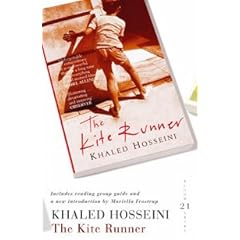
Book Review: 'The Kite Runner' (Khaled Hosseini)

Just got back from holiday in the early hours of the morning - had a wonderful time in Turkey, good rest and relaxation in a country that I had no idea was so beautiful.


Of course the time away also gave some chance to do some reading, and I plan to upload my thoughts as I get chance over the coming weeks.

One book that both my wife and I read was the highly-acclaimed novel The Kite Runner, which has recently been reprinted by Bloomsbury as part of their '21' series, a group of books that each represent the first published novel by a group of their authors.

The Kite Runner is powerful reading. Amir is a 12 year old Aghani boy who sees the shocking attack and rape of the son of his servant, Hassan. Despite having shared much of their childhood, he doesn't step in. The consequences of this attack haunt Amir for much of the rest of his life. Eventually an older friend, who learned of the attack, tells Amir that 'there is a way for you to be good again', a way that offers redemption.

There are many things that are very endearing in this novel. It's wonderfully written, and has well-observed and colourful descriptions of both Afghan and American culture. Afghan-born novelist Khaled Hosseini successsfully captures the tension and the fear of life in Afghanistan under Taliban control. The motif of kites, used throughout the book, is also an interesting exploration of freedom and innocence.

However, the one thing that really intrigued me in this book is the theme of guilt. As the novel unwinds, it becomes evident that several of the lead characters in the book. They feel guilty for different reasons and they also deal with their feelings of guilt in different ways at different times - sometimes spurred to philathropy in an effort to try and find atonement for their past errors, one character want to know punishment for his past transgressions. At other times, it's clear that escapism seems the only door open. The background of Islam also adds an interesting dimension to the book - is guilt primarily something we should feel with respect to others, or to God?

As I read this book, I was reminded of Hebrews 10, which describes the conscience of the Christian as being 'cleansed', because of Jesus' death which deals with our sin. We are reconciled to God and know that we are truly loved, even by the one we have offended. It is a wonderful thing to know the cleansing and healing that life with God brings.

I would commend The Kite Runner to anyone. It's not a pleasant read, nor is it a comfortable read. However, it is surely vital reading for those who want to understand Afghanistan better, but also for those who want to think more about the nature of friendship, betrayal, guilt and forgiveness.

Sunday, 19 August 2007

On holiday


I'm away on holiday with my wife getting some sunshine - I'll return to blogging when I get back to work in early September.

Thursday, 16 August 2007

Playing the Moldovans at tennis

I've just finished reading Tony Hawks' brilliant book Playing the Moldovans at Tennis - a story of how a bet in a pub led to adventures all across Eastern Europe.

In short, Hawks bet a friend that he'd be able to beat all members of the Moldovan national football team at tennis. This book records his attempt to do so.

It's a fun read - and there's plenty of good laughs. However, what I particularly loved was Hawks' brilliantly observed descriptions. Although he visited Moldova seven years before me, his descriptions of towns and just Moldova in general ring very true. Perhaps what made me smile most was his descriptions of the ways in which he contended with the fatalist Moldovan psyche. He's generally sympathetic in describing a country very different from our own - a country in transition, and with a lot less hope for the future than we're used to. I think he had a similar experience of Moldovans - wonderfully friendly once you get to know them, and they begin to trust you.

I miss Moldova. In fact, it's the only country in the world I've ever had a lump in my throat whilst leaving. In honesty I don't miss the cold showers, the toilets, the food and the general low quality of life there. But I really loved the people, and I hope I get the chance to return soon, and hopefully many times in the future. It's a very humbling experience as you are made to realise that there are people even in Europe who long for many of the things that we take for granted. The Christians there stick out like a sore thumb because they have hope. And in a country without much hope, it's also a remind that Jesus really is the hope of the nations.