Showing posts with label truth. Show all posts

Monday, 11 January 2010

Speaking the truth in love

I’ve been made to think in recent times about what it means for a Christian to be committed to ‘speaking the truth in love’ to other Christians, whether individuals or groups. 

Often it seems to me that, in the name of ‘godliness’, we chicken out truth telling. No doubt there a grain of sensitivity behind all this: after all, we don’t want to cause others unnecessary pain through our blabbering. On other occasions, we are aware that a particular audience just doesn’t need to hear our gripes and pains. But, looking at my heart, I know that often I fail to tell the truth to others because of my ‘fear of man’.

This fear can even be institutionalised in some Christian circles. We believe that there are certain things that we just can’t say. There is an unwritten code which dictates that talking about finding situations (or people) difficult should be not done, or only alluded to, even when we believe that we have been objectively wronged. I guess I’m not the only person to have seen this lead to an ‘elephant in the room’ syndrome where, for example, certain individuals or churches or organisations aren’t mentioned by name – although everyone on the inside knows exactly who or what is being talked about.

I wonder whether, in situations like this, any good comes at all from this approach. The veneer of words merely used to obscure painful realities rarely does anything positive. On the other hand, it can lead to cynicism, caricature and further suspicion. Motives are analysed and re-analysed – and the issue at hand remains unresolved. All in all, hardly a great model for loving others.

What is the answer? Surely it is to speak with humble honesty. I need to consider who I need to speak to about the problem, and likewise those I don’t need to speak to (for instance, it may be a matter for church elders, but not the broader church membership as a whole). I need to be certain of my acceptance by God (whether I am right or wrong), which frees me from being driven to be approved by others. I need to admit that, because of my sin and fallibility, I may be wrong and uncertain in my judgements. I need to admit that I might be part of the problem. I may need to admit to myself my confusion and confess that I don’t know the way forward. And then I speak, with graciousness and humility, to those who need to know, and don’t speak to those who don’t need to know, giving the situation time and prayer to change.

The cynicism which goes with 'the elephant in the room' is ugly and leads to a lack of truth and love between believers. But, with God’s help, we can surely speak honestly and specifically, leading to real change.

Friday, 30 October 2009

Engaging with Foucault: can we believe in truth any more?

I spoke earlier in the week at Sheffield CU's lunchbar, engaging with issues of truth. As a social scientist, it's great to be engaging with writers like Michel Foucault. (I've written before on whether Foucault is correct in thinking power must always be used in a way that invariably restricts freedoms). I owe part of my thinking here to Tim Keller. Here's a summary of what I said:

20th Century philosophies of truth: your perspective informs what you understand the truth to be. When we look at the world around us, each of us sees it from within the horizons of our own world, whether those horizons are linguistic, emotional, social, artistic or whatever. Actually our perception of things is, at best, a limited or partial view of the truth.

Foucault's bit: he added to the above by claiming that truth claims are invariably power plays (as they limit the freedoms of others to chose to live as they like).

This leads us to a kind of paralysis. The big questions are unanswerable. And when we do decide to land on one answer as opposed to another, we can get accused of trying to get power over someone else. We long for truth - but instead all we have is lots of information, a whole load of 'partial truths' at best.

Jesus on Foucault: Jesus agreed that truth can be used as a power play (e.g. in the way that he confronts the teachers of the Law in Luke 11).

We’ve all experienced times when people have spoken genuine truth to us but they have not spoken it to us in love. Instead they’ve told it to us to hurt us, to wound us, to injure us. Yes, we can step back and say, 'What you’ve said is true, but the way you said it; well, you are intending to hurt me, not to help me.' And Jesus would say: "Listen, it’s not the claim to truth that does this – that hurts people. It’s what’s in the truth claim and its intent that matters."

Let's look at Jesus by these criteria...

1. Jesus claimed to speak as someone not limited by his humanity. Jesus was a Jewish man in the 1st Century. But he claimed to speak as God in human form: that he had a God’s-eye view of the Universe. And so he claimed not just to be having a good guess about how things are, but to reveal and embody the truth.

2. Jesus' mission (in his own words) was to bring freedom. While most religions and belief systems present God as static and making demands upon us, Christianity trusts in the God who has served us, in coming to us and dying for us. And so for Christians, true freedom is found in relationship with God. When we realize all that Jesus has done to serve us and give himself for us, this speaks to our fears of giving up our independence, finding true freedom in him.

3. The intent behind Jesus' truth claims. Jesus claimed that he isn’t out to control people like us, rather he’s out to free us and to bring us into the relationship with God we’re made for. In fact Jesus was so committed to us that it ultimately led to his voluntary death in our place. So as you consider Jesus’ truth claims, test the person of Jesus: does he seem out to coerce or control?

A person is transformed when they encounter undeserved sacrifice. Once you’ve encountered someone who sacrifices on your behalf and you know you don’t deserve it, you’re aware you can never be the same. It requires transformation. That is what drives Christians. Out of love for Christ and love for others, they long to see others entering into that relationship of life with Jesus. And so Christians are committed to loving their friends (and their enemies) and pointing them to Jesus, building strong relationships based on truth. That is the natural outcome of Jesus’ teaching and intent.

So, as a Christian, can you believe in truth any more?

This was a question I used to wrestle through as I did my Masters which embraced lots of continental philosophy. Can I believe in truth any more as a Christian? Yes, because truth has made itself known in the person of Jesus; because truth diagnoses me as I really am, then offers an antidote; and because truth shows itself when lived out fully in beautiful others-centred relationships that do not hurt others but build them up.

Monday, 2 February 2009

'Revolutionary Road' and the critique of existentialism

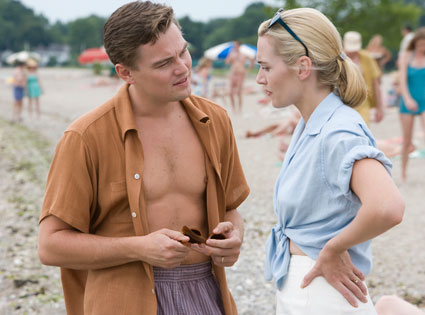
Revolutionary Road is the latest Sam Mendes offering set in suburban America. This time, he tackles the issues of happiness, freedom and their source, tracking the fortunes of married couple Frank and April Wheeler.

Frank and April are a young couple living in a model suburb (spot the similarities with American Beauty). April, played by Kate Winslet, is a failed actress and stay-at-home mother, whilst Frank, played by Leonardo DiCaprio, commutes daily to an office job in New York City.

The film picks Frank and April up as they have stalled into a rut of mundane life. Both characters feel as though they are just 'surviving': Frank in a job that he hates, April in a life she'd had never chosen minding her children. Suddenly, April gets the idea that their lives (and their marriage) can be reinvigorated if they move away from the 'comfort' of their home in Revolutionary Road and move to Paris. There she can work, whilst he works out what his vocation is. Frank eventually agrees to April's plan (he says that he, too, craves 'feeling, really feeling'), much to the consternation of their suburban friends.

Everything changes, though, when April becomes pregant, and a joke at work ends up giving Frank a chance at becoming a corporate hot-shot. With these changes, how will the Wheelers cope? April is driven by the prospects of freedom and true life - she's willing to abort and to carry on with the proposed emigration; Frank, meanwhile, prefers to numb the pain of his unfulfilment through staying busy, through material gain and through cigarettes and booze. The film essentially plays out this clash of worldviews and particularly critiques April's driven existentialism and demand for experiential fulfilment.

What's celebrated is April's zest for life: she longs for truth and a felt reality. She's willing to face up to the facts of her existence. She hates the emptiness and hopelessness of suburban life. She longs to make her life count and craves purpose, something endorsed by the fascinating character John, who has a psychiatric illness and speaks blunt truth. However, April's experience-driven choices are not shown in a completely positive light: she hurts many of those who are closest to her and treats them as objects for her gratification, she ignores her children and she makes some very dubious moral choices. In the end, the viewer can't help wondering whether her driven existentialism is irresponsible, selfish and ultimately unrealistic escapist (sentiments I've shared about existentialism before). But the only alternative given in the film is to ignore the voices that tell us that our lives don't count and numb the pain.

As a Christian, what is very obvious to me is that God is missing from the lives of the characters Revolutionary Road. The Bible speaks of a God who created humans in relationship with him and each other, of a God that judges - showing that lives matter, and a God who gives a purpose to his people. The Christian good news speaks to people like April who long authenticity, freedom and reality. It also speaks to people like Frank, encouraging them to face up to life as it really is, with all its hopelessness and emptiness. True freedom is found in offering all of one's life in joyful submission to Jesus, living life as it was created to be lived.

Sunday, 25 January 2009

Frost/Nixon and the search for truth

A film about the making of a TV interview in the 1970s might not immediately seem like a great evening out. There's already some spice added when the interview is the famous meeting of David Frost and Richard Nixon. Add a great screenplay, some brilliant individual performances and it leads to a fascinating piece.


Ron Howard's film has been very well shot. Apparently, the movie is an adaptation of a stage play; however, this isn't obvious. In fact, the strong point of the movie is the detail that comes from close up shots of the two main protagonists' faces. The scene of the final day's filming of the Nixon interview is particularly well shot, using shots of Nixon and Frost's face on the monitor nearby capturing incredibly emotional intensity. The film tracks the emotions and passions of the two men over the period of the interviews, and uses these to tell its story. The acting is superb, and Frank Langhella deserves his Oscar nomination.

Truth is the driving nature of the movie. It is presented as having a redemptive element. Indeed, Frost's crusade to force Nixon to confess his Watergate-related misdemeanors is because it is considered that Nixon never received the justice that he should have rightfully faced. It's a champagne moment when Nixon finally confesses, and has (along with his family and friends) to publicly live with the consequences of his actions. The truth shows Nixon as he really is: neurotic, insecure, arrogant and paranoid.

However, the movie also blurs issues of truth. Firstly, there's a blurring between conventional movie and documentary, which means that in the film itself its difficult to separate truth and creative license. The content of the movie also blurs simple understandings of truth. Cultural theorist Marshall McLuhan wrote in the mid 1960s that 'the medium is the message'; that is, that the type of medium that is used to communicate something affects what is communicated. 'Truth' is 'conditioned' by the medium through which it is communicated. This is a theme that comes through clearly in Frost/Nixon: for instance, there's comment on the famous Nixon-Kennedy debate: while radio audiences thought Nixon won it by a landslide, on television Nixon appeared emaciated, unhealthy, and awkward, while Kennedy appeared handsome, tanned and confident. Meanwhile, throughout the movie, the viewer is shown glimpses of how both Frost and Nixon camps seek to manipulate circumstances in order to produce the 'truth' they crave. This all contributes to what postmodern scholars call 'the hermeneutic of suspicion': the position of scepticism that assumes that one is rarely (or never) being shown the whole truth; but rather a message that is mediated and influenced by power games. Even in the final scene the whole truth is hidden as a 'white lie' is considered kinder and more beneficial.

Perhaps the contemporary popularity on Frost/Nixon is because the movie concerns a politician who has made mistakes: Will he come clean, tell the truth and admit that he made mistakes and acted wrongly? And how might remorse for these actions show itself? In a world that is now moving on from Blair and Bush, these are questions that still echo loudly.

Friday, 9 May 2008

'The History Boys': what is truth?

Today the Relay Workers and I watched Alan Bennett's film The History Boys, a film that I'd been hoping to watch for quite some time. It was a really engaging watch - an excellent script, some really humorous moments and a set of excellent performances from the lead characters.

Set in Sheffield in 1983, the film follows a series of bright Sixth form history students preparing for their Oxbridge entrance exams. The boys have been taught up to the point of the film's opening by the fairly orthodox Mrs Linnott and the maveric Hector, whose input into the boys' education includes teaching poetry, songs and the arts. However, the headmaster of the grammar school where the boys are based decides that a fresh face is needed to give them the 'extra' they need to get through the interview process. Oxford graduate Mr Irwin is recruited, challenging the boys to question traditional interpretations of historical events. Irwin is after 'more than just the facts'. He dismisses their essays as, 'not even bad, just dull,' and sets about feeding them 'gobbets' of information which, he claims, will set them apart from the thousands of other Oxbridge hopefuls. The main plot contrasts the different teaching styles that the boys receive, building up to their Oxbridge interviews.

However, underneath the plot the film poses a number of questions. Perhaps the most important is: what is history and how do we make sense of our lives? The film comes from an atheistic viewpoint, and Christianity is presented as a superstition and repressive influence. Death is a tragic end. Perhaps not surprisingly, then, history is understood as being, in the words of one of the characters, Rudge, 'one thing after another', with no obvious direction. Events happen for no obvious reason. Why one event happens and another does not cannot be rationalised; they are, in the words, of Mrs Linnott 'utterly random'. Events occur as just one direction rooting from 'the junction of a dizzying range of alternatives.'

Perhaps the most powerful scene of the film is where Hector, Irwin and the boys discuss the Holocaust (below). Irwin tries to convince the boys that there is no way of objectively knowing and evaluating history. One of the boys suggests that to 'explain' such unprecedented evil as the death camps of the Holocaust is to 'explain it away'. In other words, to try to find a cause and to blame certain individuals lessens the impact of the event and appears to excuse it. Irwin enthusiastically endorses him, as this suits his subversive and postmodern view of history.Yet to others sat there, not to label the Holocaust as an evil act is offensive. This, perhaps, comes to one of the unresolved questions that the film asks: can any historical event be categorised as evil, given that we have imperfect detail about that event?


The other question that the film poses is how to make sense of events and how to live in the universe the film portrays. There's a stark difference between the view of history that Irwin espouses and the morality by which he governs his life. He may muddy the waters of right and wrong in his view of history, yet struggles to show the same flexibility in his own morality. (One of the boys asks him, "Reckless, impulsive, immoral - why is there such a difference between the way you teach and the way you live). Perhaps the film points towards a kind of existentialism - of being true to oneself; seen most clearly in the characters of Rudge, who makes decisions for himself and not what others want him to do, and Posner, one of the boys who is coming to grips with his homosexuality. But one cannot help but notice the sadness that most of the characters feel. Hector looks back on his teaching career with sadness, despite having been appreciated by many (I wonder if this might be an autobiographical note from Alan Bennett). The closing scene of the film is also somewhat sad.

The film is fun and I really enjoyed it. It's also a dark glimpse into the mind of the existentialist that lives for the moment, but perhaps also illustrates the in-built uneasiness that atheists have in a world of no moral absolutes.

Tuesday, 25 September 2007

Atonement

Atonement carries the idea of 'covering' something. It's particularly associated when one tries to somehow cover a mistake that one has made.

It's also the latest film adaptation of one of Ian McEwan's books, currently out in the cinemas. James McAvoy is particularly excellent in a good all-round film, which looks good and sounds good (you can tell special attention has been paid even in the smallest detail to how things sound).


The plot centres on the life of Briony Tallis. As the film opens, she is aged 13 and it is the 1930s. Through a combination of misinterpretations of events and outright lies, she ensures that her housekeeper's son, Robbie, is imprisoned for rape, and separated from his love, Briony's sister Cecilia. The rest of the film concerns her attempt to try and make sense and make amends for her actions. What becomes evident as the story unwinds is that it is a mixture of real events and other events interpreted and even fabricated by a guilty conscience.

I think there are two interesting themes that emerge from this film. The first is that of justice. Briony evidently struggles with the fact that Robbie never experiences the life that he 'deserved', happiness with Cecilia, due to her actions. A good reminder that, if this life is all that there is, life is fundamentally unfair. We often struggle with the idea of God's justice, until we remember that if God didn't judge, his ultimate verdict on our lives (and on the characters of Briony and Robbie) would be, "See if I care!"

The other theme is that of guilt. Without giving too much away, it becomes evident at the end of the film of the extent to which Briony has been crippled by her guilt. She is unable to move on and still interprets other events through her guilty conscience. It's true that guilt is often hard to escape. But what would Jesus say to Briony Tallis? I think it would be something like this:

What you did was wrong, and you know it was wrong. You have seen how horrible it is to rebel against my way and to live your own way in my world. It hurts other people and it has offended me. Yet I will take the punishment that you deserve and give you a fresh start. You no longer need to feel guilty. You can have a clean conscience.

Thursday, 26 July 2007

Can we be certain about anything at all? (1)

I'm currently reworking a lunchbar I wrote a couple of years ago with the above title. As I've worked on it again, I've realised I need to do a bit more thinking in some areas. I want to write a mini-series of posts with my understanding of things so far, and I'd be happy to engage with what others think too.

In this first post, I want to briefly introduce the philosophical background to the question of certainty, and the recent increase in scepticism.

Whilst I think it's over-simplifying things to say that modern philosophy was more comfortable with the idea of certainty, it did have a more comfortable relationship with the idea of being certain than we do today. John Stuart Mill, for instance, wrote that, 'There is no such thing as absolute certainty, but there is assurance sufficient for purposes of human life.' The modern view of 'truth' was correlative to this position on certainty: it was generally assumed that truth existed and could be known.

This view of truth and certainty was eroded during the 20th Century, as continental postmodern philosophy increasingly developed. Ludwig Wittgenstein's book On Certainty, written shortly after the Second World war, was founded upon the premise that the way that we understand things depends on the context from which we see them. Each person is restricted in our view of the world by their embodied perspective. One postmodern theorist asked the question: what shape is a piece of A4 paper? His reply was: if you look at it one way, it is a very thin, straight line. Look at it from a different angle and it is a rectangle. It is your perspective that tells you what shape a piece of A4 paper is.

And it's not only that we can only be in any one place at any one time. Feminist and post-colonial writings have woken us up to the fact that the way in which we diagnose and understand any given thing or situation depends upon a whole series of elements and characteristics: one's period in history, thought world, personality, childhood, and so on. The way in which a humans understand things - even objects - are affected by whether, for instance, they are from Birmingham or Baghdad (see here for a posting on Jacques Derrida's work in this area). In other words, when you look at the world around you, you see it from within the horizons of your own world, and so do I, whether those horizons are linguistic, emotional, social, artistic, linguistic or whatever. Actually our perception of things are, at best, a limited or partial view of the truth.

Once we begin to grapple with these ideas, we see whether the postmodern attack on 'truth' is rooted. Indeed, theorist Jean Baudrillard said that it’s wrong to speak of 'truth' or 'facts' any more, but instead we should speak of ‘models of reality’. In addition, Foucault's work on power and knowledge led him to speak about a 'hermeneutic of suspicion': he argued that whenever someone is claiming to tell 'the truth' that they are trying to wield power over others. We're suspicious of the folks that phone us up to tell us 'the truth' about how they can cut our phone bills (often rightly, as we know there is a hidden agenda). Foucault calls us to be sceptical of all truth claims, because there is most likely more going on than just simple communication.

When we add the media to the mix, things get even more confusing! Baudrillardwrote extensively on the media. He argued that the modern media – including films, papers, TV and the internet – mediate the world to us in very powerful ways. It starts to become difficult to work our whether what is being presented is the real world, or merely someone else’s view of the world. In fact, Baudrillard famously claimed that we cannot possibly know whether world events such as the Gulf War actually ever occurred, because the only access we have to the events is mediated. Media inevitably give a partial and manipulated version of events. It’s impossible to know whether we are reacting on the basis of the real and [fairly] unmediated facts, or someone else’s version or manipulation of things. Again, we become our most sceptical when we think there’s power involved: “The government, or society [or whoever] wants me to believe this so that I will act in a certain way.” And we don’t like to think that we’re being manipulated in this way. We have lots and lots of information – but 'the truth' is obscured and considered by many to be unknowable. A number of books and films have picked up on these themes – books like Neuromancer by William Gibson, and films like The Matrix and Wag the Dog blur the boundaries between the real world and virtual reality. Perhaps the best recent example is The Truman Show – where the main character, Truman, lives in a totally artificial world - but has been unable to tell the difference for most of his life.

This view of the truth and spirit of scepticism has big implications: including for Christianity, our understanding of the Bible and for evangelism. In future posts, I'll pursue some of these areas.