Showing posts with label death. Show all posts

Tuesday, 7 April 2009

Go elsewhere

A couple of interesting links to follow:

  • The incredible sermon given at Jade Goody's funeral. Jade apparently discovered the hope that having Jesus brings in the last days of life. What an amazing testimony to God's grace that this sermon is!
  • Lancaster University CU's mission week features towards the episode here of the 'LA1 Show', produced by Lancaster University's Lutube [HT: Michael Ots].

Tuesday, 17 February 2009

Benjamin Button? I'd rather have 2 Corinthians 5

Already nominated for major awards and an Oscar favourite, The Curious Case of Benjamin Button is a film that has been pulling in the viewers. And it's no surprise. There's an all-star cast, a great idea, a heart-breaking love story and incredible special effects. It's message is engaging but - as I've hinted in the title to this post - one I have found increasingly unsatisfactory as I've thought more about this film since I saw it.

Benjamin Button
is about a man who is born in his eighties and who, over time, grows younger. It is based on the short story by F. Scott Fitzgerald. The story begins in New Orleans at the end of World War I in 1918 and ends in the 21st century. Benjamin's life is characterised in the movie by the people he meets, the places he discovers, the loves he experiences, the many joys of life he knows, and the sadness of losing people he loved.

Cinema-goers have been somewhat polarised by the film. For some, the film is magical and wonderful. For others, it is dull and dreary. For my wife, Linda, it was the latter. Certainly, the film dragged in places and the action took a while to develop. And whilst the special effects and the make-up are brilliant - it's so strange seeing Brad Pitt and Cate Blanchett as pensioners - this didn't really capture my attention for the nearly three hour duration of the film.

The most interesting aspect of the film was it's lament - death is lamented, broken relationships are lamented, happy times that have to finish are lamented and bodies that break and become diseased are lamented. Benjamin's increasingly younger body simply reminds Daisy of her increasingly ageing body, heading as it is toward death. And so the movie is characterised from start to finish by recognising the sheer fragility of human life. Indeed, a collection of quotes from the film can be found here, which reflects this point.

Life is presented as 'a series of intersecting lives and incidents, out of anyone's control'. A fate greater than ourselves seems to decide whether we live or die (as shown comedically by the Mr Daws, who's apparently been struck by lightning seven times - who survived, but who has to live with bodily effects of what happened), making life a person's greatest gift. Wallowing in resentment for what has ceased or gone wrong is, according to the film, a waste of time. And so the heroic characters in the film are those who make the best of their lives and experience what they can, despite the unfortunate circumstances that they might have faced - whether that's swimming the English Channel later in life, or dancing. As Benjamin puts it,

'For what it's worth: it's never too late or, in my case, too early to be whoever you want to be. There's no time limit, stop whenever you want. You can change or stay the same, there are no rules to this thing. We can make the best or the worst of it. I hope you make the best of it. And I hope you see things that startle you. I hope you feel things you never felt before. I hope you meet people with a different point of view. I hope you live a life you're proud of. If you find that you're not, I hope you have the strength to start all over again.'
And so the film causes the viewer to ask questions in the light of these sad truths: Am I using my time wisely? Are I letting life happen to me, or am I happening to life?

As a Christian, I found a film about what it's like to be continually surrounded by the reality of death both engaging and sad. Engaging, because Hollywood rarely takes on such a subject in a subtle and real way. But I also found it sad - because of the lack of hope that was portrayed. As grateful as the central characters appear for the gift of life they have received, the reality of death punctures it continually. And at most, an elderly Daisy mentions being curious about what happens 'next' after her final breath. This apparent lack of belief in a personal God - or a meaningful afterlife - inevitably leads to sadness. Benjamin and Daisy live to fully experience their lives, but it's as if they are always watching the clock, always aware that 'nothing ever lasts'. I found myself leaving the cinema very grateful for the hope that 2 Corinthians 5 offers me through Christ - a hope of a new body and a life beyond death in the renewed creation: a life of solid joys and lasting pleasures. I can't help but think that this is what the film's writers crave.

Ultimately, I found Benjamin Button's message frustrating. Frustrating because it's sometimes not enough to be told to just be grateful for life and to experience it as best we can. The film hits the nail on the head as it pictures the tyranny of time, a life inevitably heading toward death and the destruction and hardship of a broken world and broken bodies. But we long for more than this - deep down we know that God has set eternity in our hearts and we long for more.

Saturday, 21 June 2008

Coldplay on death, judgement and the meaning of life

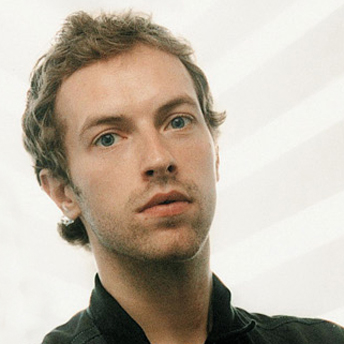
One of the other major themes that emerges through Coldplay's latest offer, Viva la Vida, is that of death and judgement. Fascinatingly, it's a subject that Chris Martin recently spoke on in a recent interview with Rolling Stone magazine.

In the interview Martin reveals that, although he continues to believe in God, he has apparently rejected the idea of hell existing. He reveals that, in particular, as he grew up as a teenager, he hated the idea that his own sexual morality might affect or determine his eternal fate.

The album track, Yes, seems to be a reflection on this sort of subject, told by someone who is struggling alone in sexual temptation and guilt: 'Yeah we were dying of frustration / Saying "Lord lead me not into temptation" / But it's not easy when she turns you on / If you'll only, if you'll only say yes / Whether you will's anybody's guess / God, only God knows I'm trying my best / But I'm so tired of this loneliness.'

I can't help feeling sad when I read these lyrics - because I can't help feeling that Martin has missed the heart of the Christian message. There's nothing about God's goodness - even in giving us a blueprint for sexuality - and nothing about grace. It's awful to think that any person can feel that they've blown it forever with God.

That Chris Martin longs for more - indeed, that he longs for something beyond death - is clear. The song 42 may, I think, be a reference to 'the meaning of life' in The Hitchhiker's Guide to the Galaxy, and asks deep existential questions about death and what it means to be alive: 'Those who are dead are not dead / They’re just living my head / And since I fell for that spell I am living there as well / Time is so short and I’m sure / There must be something more.' To airbrush out the existence of death and whatever comes after is foolish, yet Martin adds to be preoccupied with death and whatever comes after is to miss the point of living now. The track reminded me of Paul's teaching in 2 Corinthians 4: that life now only makes sense - and that we only truly live radically now - once we are convinced that Jesus' blood has bought us a place with God forever, in the place of solid joys and lasting pleasures.

The final track, Death and All His Friends, dreamily reflects on the brevity of life. It shows a desire to make the most of our time now, yet also seems to convey how we feel that like is too short. As Ecclesiastes puts it, we sometimes feel that eternity has been set in our hearts. Death feels like a disruption.

And for all of his dislike of institutional religion and the violence done in the name of Christianity, the song Reign of Love seems to reflect a longing for a kingdom of pure goodness - possibly even a reference to what Jesus called the Kingdom of God, where God's rule is perfectly manifest. Perhaps that's what Chris Martin hopes for above all: in all of the messiness, he hopes for redemption. As a powerful lyric from Lovers in Japan puts it, 'But I have no doubt / One day the sun will come out '

Thursday, 19 June 2008

Coldplay: Viva la vida on religious violence

Coldplay's latest offering, 'Viva La Vida' Or 'Death And All His Friends', to give the album its full title is, by most people's opinions, quite a departure from recent albums.

Not only is the sound quite different (no doubt at least partly due to the influence of Brian Eno), but so is the intensity of the lyrics. Gone, it would seem, are the days of arbitrary and semantic nonsense of songs like Yellow. And Chris Martin's lower pitch and the balance of the songs in this album draws more attention to the songs' lyrics.

Over a couple of posts, I plan to look at some of the lyrical themes.

One of the key motifs is that of religious violence. The first track with words on the album, Cemeteries of London, provides a case in point. It is a song about the drowning of witches. Chris Martin spoke of the song recently saying this: 'I was interested about that period in London where people were supposedly drowned for being a witch. And that’s where that song came from. About being accused of something you didn’t do.' The accusers are clearly religious ones. One of the lyrics puts it like this: 'Through the dark streets they go searching to see God in their own way.'

Light and darkness is a key theme that runs throughout the album. And so the song concludes suitably depressingly in its judgement: 'There’s no light over London today.'

The two singles from the album, Viva la Vida and Violet Hill, also concern religious violence. In Viva la Vida, the narrator appears to be an army commander who legitimates his actions by appealing to the authority of God. Mention of the city of Jerusalem may allude to the Crusades, although it could refer more widely. Either way, it’s clear that Christianity is very much in mind where one hears the lyric: ‘For some reason I can't explain / I know Saint Peter will call my name / Never an honest word / But that was when I ruled the world.’ The mention of Peter, who holds ‘the keys of the church’, brings heaven into mind. It’s not clear whether the story-teller regrets the lies that went with his campaign.

Violet Hill is told from the point of view of a (possibly dead) foot soldier. Again, the link between religious violence and Christianity is made very clear: ‘Priests clutched onto Bibles / And went out to fit their rifles / And the Cross was held aloft.’ If, as is my hunch, the song is told from the point of view of someone that died in battle, the refrain and final lyric becomes particularly poignant, referring to a relationship prematurely ended in an unnecessary death in the name of Christ.

These songs could refer historically to the many occasions when Christians have appeared to endorse violence. It would seem very likely to me that there’s at least some critical reference to the Religious Right’s endorsement of the American violent invasion of Iraq and the many deaths that have occurred there. If so, Coldplay’s lyrics reflect a wide suspicion that, at best, Christianity can often be misused or, at worst, it induces violence – just as it did during the trial of witches and during the Crusades.

That sort of violence is far from condoned in the teaching of Jesus – indeed, it is criticised. Authentic Christianity would never condone the Crusades or the freedom of thought. Yet Coldplay’s lyrics show that many are still suspicious – and angry – of power play in the name of Christ around the world in history and even today.

Monday, 30 July 2007

Death is dead, love has won, Christ has conquered

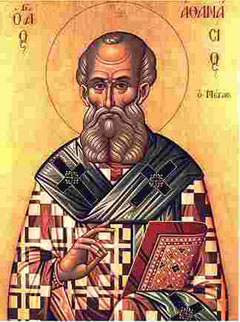
Following a recommendation by a former church pastor, Stuart, I've been reading Athanasius' wonderful On the Incarnation, written in about 318AD and available in full online here.
I'll probably write more about Athanasius of Alexandria in days to come. However, I wanted to immediately share a fantastic extended quote. Here he is arguing for the destruction of death (in Chapter 5 Sections 29-31):

If you see with your own eyes men and women and children, even, welcoming death for the sake of Christ's religion, how can you be so utterly incredulous and maimed in your mind as not to realise that Christ, to Whom these all bear witness, Himself gives the victory to each, making death completely powerless for those who hold His faith and bear the sign of the cross? No one in his sense doubts that a snake is dead when he sees it trampled underfoot, especially when he knows how savage it used to be; nor, if he sees boys making fun of a lion, does he doubt that the brute is either dead or completely bereft of strength. These things can be seen with our own eyes, and it is the same with the conquest of death. Doubt no longer, then, when you see death mocked and scorned by those who believe in Christ, that by Christ death was destroyed, and the corruption that goes with it resolved and brought to an end.

[...]

If, as we have shown, death was destroyed and everybody tramples on it because of Christ, how much more did He Himself first trample and destroy it in His own body! Death having been slain by Him, then, what other issue could there be than the resurrection of His body and its open demonstration as the monument of His victory? How could the destruction of death have been manifested at all, had not the Lord's body been raised?

But if anyone finds even this insufficient, let him find proof of what has been said in present facts. Dead men cannot take effective action; their power of influence on others lasts only till the grave. Deeds and actions that energize others belong only to the living. Well, then, look at the facts in this case. The Saviour is working mightily among men, every day He is invisibly persuading numbers of people all over the world, both within and beyond the Greek-speaking world, to accept His faith and be obedient to His teaching. Can anyone, in face of this, still doubt that He has risen and lives, or rather that He is Himself the Life? Does a dead man prick the consciences of men, so that they throw all the traditions of their fathers to the winds and bow down before the teaching of Christ? If He is no longer active in the world, as He must needs be if He is dead, how is it that He makes the living to cease from their activities, the adulterer from his adultery, the murderer from murdering, the unjust from avarice, while the profane and godless man becomes religious? If He did not rise, but is still dead, how is it that He routs and persecutes and overthrows the false gods, whom unbelievers think to be alive, and the evil spirits whom they worship? For where Christ is named, idolatry is destroyed and the fraud of evil spirits is exposed; indeed, no such spirit can endure that Name, but takes to flight on sound of it.

This is the work of One Who lives, not of one dead; and, more than that, it is the work of God. It would be absurd to say that the evil spirits whom He drives out and the idols which He destroys are alive, but that He Who drives out and destroys, and Whom they themselves acknowledge to be Son of God, is dead.

Like Peter in Acts 3-4, Athanasius could see that the acts of the risen Lord Jesus were proof of his victory. Oh that, like the believers that Athanasius wrote about, Christians today would grasp the extent and the magnitude of Jesus' victory! I was reminded as I read of Richard Dawkins' claim in The God Delusion that he couldn't really see heavenly-mindedness in the lives of Christians. Perhaps an exaggeration on his part but, oh, that we would be more heavenly-minded! Oh that we would know and live in the light of the fact that the last enemy, death, has been defeated by Christ!

I pray that my life might be an apologetic that could have been used by Athanasius to prove that Jesus is alive and active in his world.